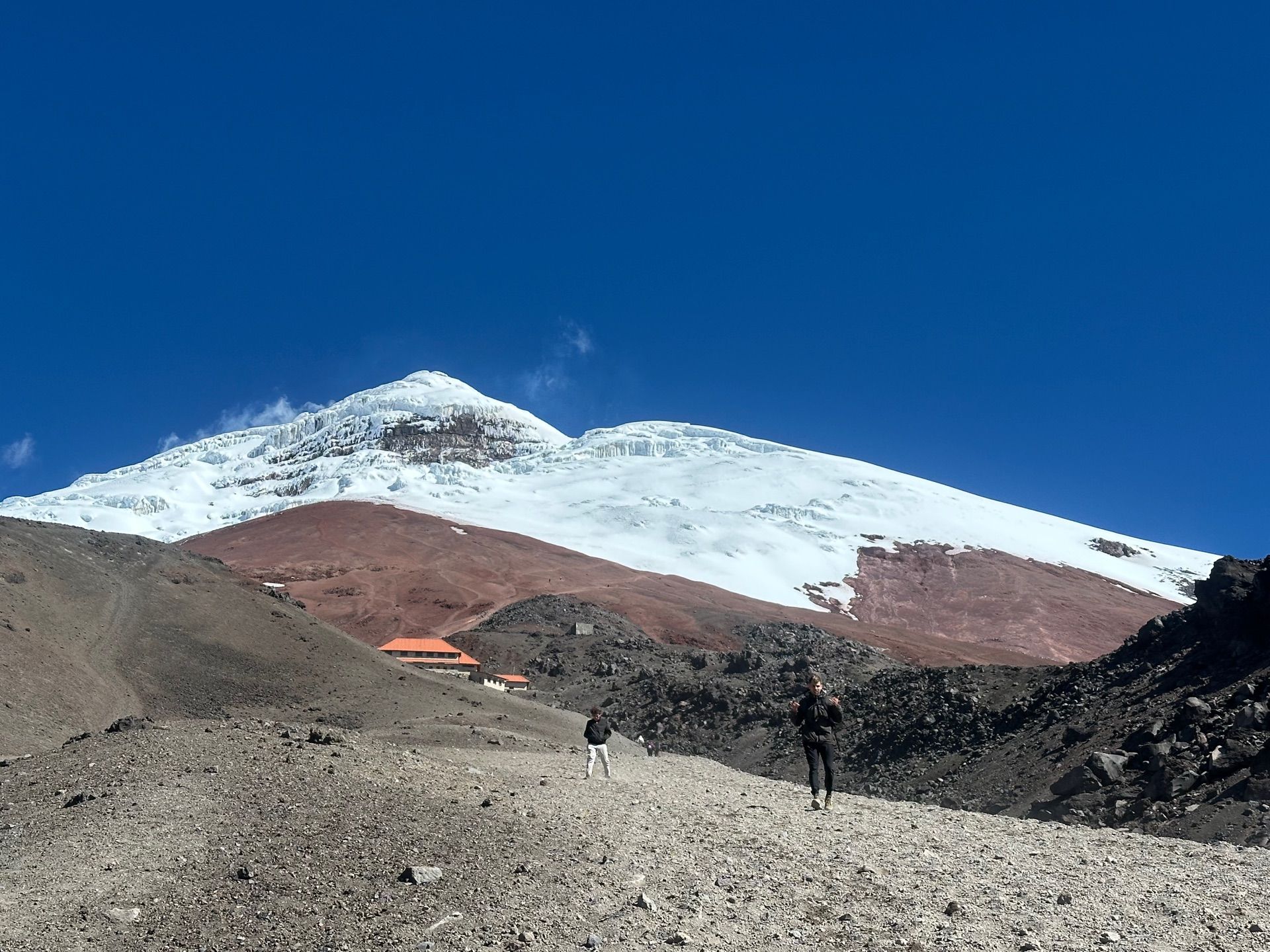
Cotopaxi · 5,897 m · Ecuador
Climbing Cotopaxi
A guided multi-day ascent of the best-known glacier on the equator. It is non-technical, but the summit is serious, so we build acclimatization days in until your body is ready for it.
Is climbing Cotopaxi for you?
Climbing Cotopaxi takes you to the top of the highest active volcano most people will ever stand on, a glaciated cone rising to 5,897 m (19,347 ft) above the Andes. The climb is non-technical: there's no rock climbing, just a long, roped glacier ascent on crampons. What makes the Cotopaxi summit hard is altitude and endurance. Near the top there is roughly half the oxygen of sea level, and you'll be moving for six to eight hours through the night to get there.
Fit hikers with no previous mountaineering experience summit Cotopaxi all the time, because we teach the glacier skills during the program. Timing your climb to the right season matters just as much: see our best time to climb Cotopaxi guide. What the mountain does not forgive is a shortcut on acclimatization.
Why we don't sell the 2-day climb from Quito
Many companies sell Cotopaxi as a quick 2-day climb straight from Quito. It can work. A cold attempt with no acclimatization still has a noticeably lower success rate and is harder on your body. If you've spent days at altitude first, your odds of a safe summit go up sharply. A climb of Iliniza Norte beforehand is the single best preparation. We'll always recommend the multi-day acclimatized program over a rushed dash, even when the shorter trip is easier to sell.
Your itinerary
The classic 2-day summit
Drive south down the Avenue of the Volcanoes, gear fitting and a hike to the José Ribas refuge (4,800 m). Afternoon glacier-skills session: crampons, ice axe, roped travel and self-arrest. Early dinner, sleep by 7 pm.
Wake near midnight, rope up and climb by headlamp. A 6–8 hour glacier ascent brings you to the 5,897 m summit around sunrise. After the crater views comes a 2–3 hour descent and the drive back to Quito.
Recommended: the 5-day acclimatized program
Warm-up summits like Pasochoa (4,200 m) and Rumiñahui (4,721 m) to let your body build red blood cells before the big day.
A higher acclimatization peak with some scrambling. How you feel up here is the best predictor of a Cotopaxi summit.
Move to the José Ribas refuge, review glacier technique and rest for the summit push.
Midnight start, summit at dawn, descend and return. With days of acclimatization behind you, success rates climb well above a cold 2-day attempt.
Cotopaxi altitude profile
Acclimatization is the whole game. At the Cotopaxi summit (5,897 m) you breathe about half the oxygen you do at sea level, so we stage your altitude carefully:
- Quito base: 2,850 m
- Pasochoa: 4,200 m
- Illiniza Norte: 5,126 m
- José Ribas refuge: 4,800 m
- Summit: 5,897 m
What's included
Included
- ASEGUIM-certified mountain guide (2:1 ratio)
- Technical gear: boots, crampons, ice axe, harness, helmet, rope
- Refuge night + acclimatization lodging
- All park fees and private transport from Quito
- Meals on the mountain
Not included
- International flights and Quito hotels
- Travel & mountain rescue insurance (required)
- Personal clothing layers and sleeping bag
- Guide gratuities
Gear
We provide
- Double mountaineering boots
- Crampons & ice axe
- Climbing harness & helmet
- Ropes and technical hardware
You bring
- Warm layers & waterproof shell
- Headlamp + spare batteries
- Gloves (liner + insulated)
- Sunglasses & glacier sunscreen
- Sleeping bag (or rent from us)
Safety on the mountain
- ASEGUIM / IFMGA-certified guides
- Maximum 2 climbers per guide, by Ecuadorian law
- Guides hold turn-around authority: safety over summit
- Wilderness first-aid & rescue protocols
Cotopaxi climbing FAQ
How hard is it to climb Cotopaxi?
Cotopaxi is challenging but non-technical: there is no rock climbing, just a long glacier ascent on crampons. The difficulty is altitude and endurance: you'll climb for 6–8 hours through the night to reach 5,897 m, where there is roughly half the oxygen of sea level. Fit hikers with the right acclimatization regularly summit.
How many days does it take to climb Cotopaxi?
The summit itself is a 2-day trip (refuge night plus a midnight summit push). But we strongly recommend a 4–5 day program that adds acclimatization peaks first. It raises your summit odds a lot and is far safer than a cold attempt straight from Quito.
Can you climb Cotopaxi without a guide?
No. Ecuadorian law requires a licensed mountain guide for peaks above 5,000 m, at a maximum ratio of two climbers per guide. On a glaciated, crevassed mountain a certified ASEGUIM guide is the law and also the person who keeps you safe.
Do I need mountaineering experience to climb Cotopaxi?
No prior glacier experience is required. We teach crampon, ice-axe and rope skills during the program. You do need solid hiking fitness and the willingness to train. Cotopaxi is a fantastic first big glaciated summit.
What is the best time to climb Cotopaxi?
The driest, most stable windows are December–January and June–August. Cotopaxi can be climbed year-round, but summit success drops in the wetter months when high winds and fresh snow are more common.
What is the success rate on Cotopaxi?
Around 60–80%. A rushed 2-day climb sits at the lower end; climbers who follow a multi-day acclimatization program reach the higher end. A good guide will always turn you around safely rather than push a risky summit.
Is Cotopaxi open for climbing?
Yes. Cotopaxi National Park reopened to climbers in February 2024 after periods of closure linked to volcanic activity. We monitor the official status continuously and tell you the current conditions before you book.
How fit do I need to be?
You should be able to hike 6–8 hours uphill carrying a light pack. We recommend 4–6 weeks of cardio plus weighted uphill walks before the trip. If you can comfortably do a long, steep day hike, you can train for Cotopaxi.
Send us your dates for Cotopaxi
Tell us your dates and hiking background. We'll pace the climb with acclimatization days that give you a fair shot at the summit, guided by people who grew up under this volcano.