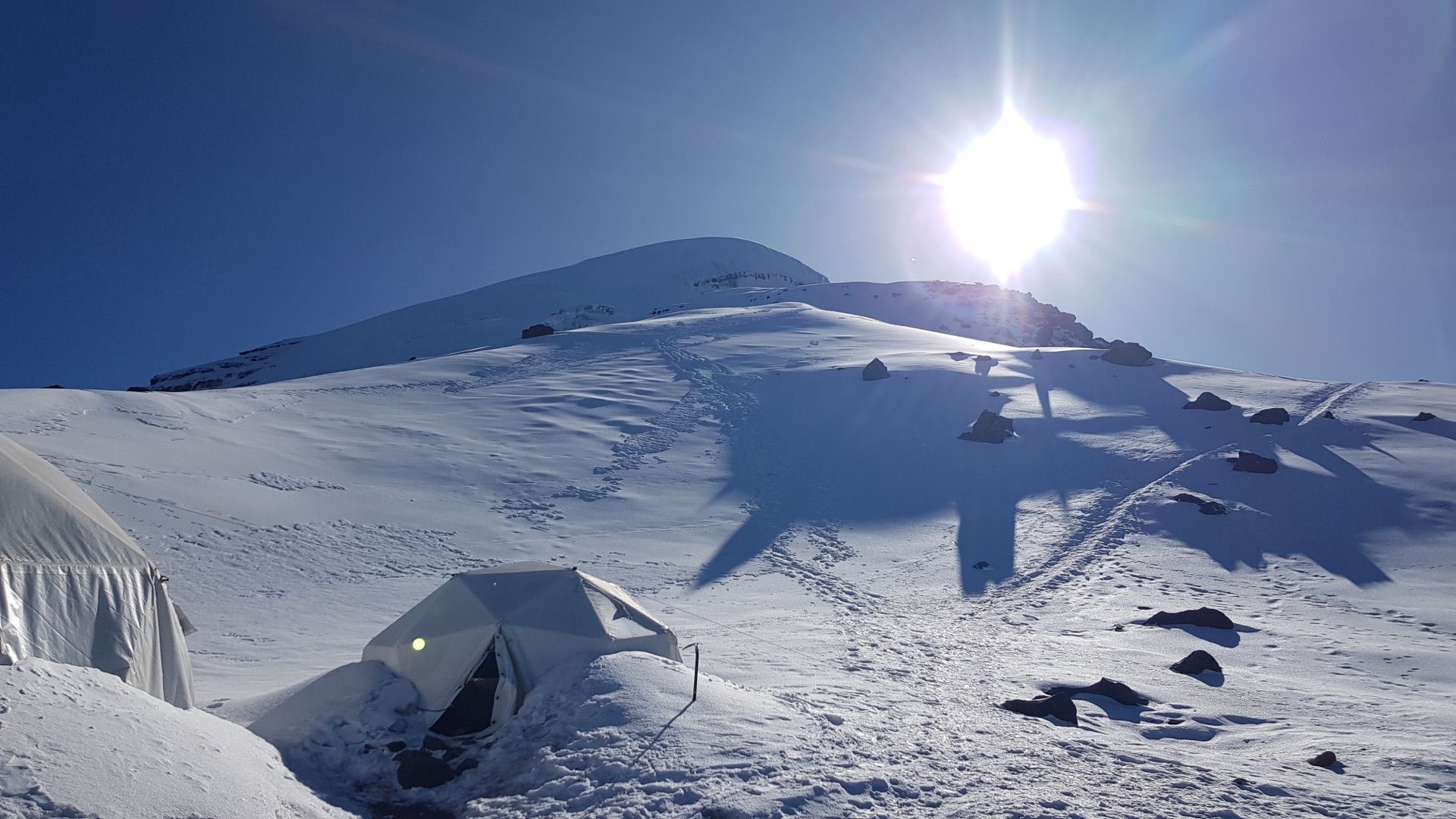
Chimborazo · 6,263 m · Ecuador
Climbing Chimborazo
Stand on the point of the planet closest to the sun. Chimborazo is Ecuador's highest summit, a demanding multi-day glaciated climb that we build around several days of acclimatization.
Is climbing Chimborazo for you?
Climbing Chimborazo means standing on the farthest point from the planet's centre. Earth bulges at the equator, so this summit (6,263 m / 20,548 ft) is the closest you can stand to the sun. It is Ecuador's highest mountain and a harder climb than Cotopaxi: higher, colder and a longer night on the glacier. The route is still non-technical glacier travel on crampons. The altitude is what stops people.
For that reason Chimborazo is rarely a first summit. Most climbers come to it after acclimatizing on Cotopaxi or the Ilinizas, and we plan it that way. The reward is one of the great summits of the Andes, and the highest your own two feet can take you toward the sun.
Why we won't sell you a rushed Chimborazo
Chimborazo's summit success rate is around 50%, and the biggest factor is acclimatization. A quick attempt without days at altitude first is unlikely to succeed and harder on your body. We only run Chimborazo as an acclimatized multi-day program, usually after Cotopaxi, because that gives you a fair and safe shot at the top.
Your itinerary
The Chimborazo summit (4-day core)
A high warm-up hike on the Ilinizas or Carihuairazo (5,018 m) to prime your body before moving onto Chimborazo.
Active recovery, hydration and a full gear check at altitude. Vicuñas roam the high reserve around the mountain.
Drive to the Carrel refuge (4,850 m), hike up to the Whymper refuge (5,000 m), review glacier technique and rest before a midnight start.
Depart around 11 pm for a long 7–9 hour ascent via the El Castillo route. Summit Ecuador's highest point near dawn, then descend carefully and return.
Recommended: Cotopaxi + Chimborazo combo (8–9 days)
Run the full acclimatization program and summit Cotopaxi (5,897 m) first. No preparation for the bigger peak works better.
Rest, then move south to the Chimborazo reserve and the Carrel refuge.
With a major summit already behind you, push for Chimborazo's 6,263 m top with the best odds you can give yourself.
Chimborazo altitude profile
At 6,263 m the air holds barely more than 40% of the oxygen at sea level. Chimborazo punishes anyone who arrives unacclimatized, so we stage the altitude over days:
- Quito base: 2,850 m
- Carihuairazo: 5,018 m
- Carrel refuge: 4,850 m
- Whymper refuge: 5,000 m
- Summit: 6,263 m
What's included
Included
- ASEGUIM-certified mountain guide (2:1 ratio)
- Technical gear: boots, crampons, ice axe, harness, helmet, rope
- Refuge nights + acclimatization lodging
- All reserve fees and private transport
- Meals on the mountain
Not included
- International flights and city hotels
- Travel & mountain rescue insurance (required)
- Personal clothing layers and sleeping bag
- Guide gratuities
Gear
We provide
- Double mountaineering boots
- Crampons & ice axe
- Climbing harness & helmet
- Ropes and technical hardware
You bring
- Warm layers & waterproof shell
- Headlamp + spare batteries
- Gloves (liner + insulated)
- Sunglasses & glacier sunscreen
- Sleeping bag (or rent from us)
Safety on the mountain
- ASEGUIM / IFMGA-certified guides
- Maximum 2 climbers per guide, by Ecuadorian law
- Guides hold turn-around authority: safety over summit
- Wilderness first-aid & rescue protocols
Chimborazo climbing FAQ
How hard is it to climb Chimborazo?
Harder than Cotopaxi. Chimborazo is non-technical glacier travel with no rock climbing, but at 6,263 m it is higher, colder and a longer summit night (7–9 hours), with under half the oxygen of sea level. Strong fitness and several days of acclimatization are essential.
Is Chimborazo higher than Cotopaxi?
Yes. Chimborazo (6,263 m) is Ecuador's highest mountain, about 366 m higher than Cotopaxi (5,897 m). Its summit is also the farthest point from Earth's centre, which makes it the closest point on the planet's surface to the sun.
How many days do I need to climb Chimborazo?
We run Chimborazo as a 4–6 day acclimatized program, and often as an 8–9 day combo after Cotopaxi. It is rarely a sensible first summit, because the success rate without acclimatization is low.
Do I need to climb Cotopaxi first?
Not strictly, but it's the ideal preparation. Most successful Chimborazo climbers acclimatize on Cotopaxi or the Ilinizas first. We'll design a build-up that fits your time and experience.
What is the success rate on Chimborazo?
Around 50%. Altitude, weather and acclimatization decide it. A well-acclimatized climber with good conditions has a strong chance; a rushed attempt does not. Your guide will turn you around safely if conditions aren't right.
What is the best time to climb Chimborazo?
December–January and June–September are the most stable windows. We avoid the wettest months when high winds and fresh snow lower both safety and success.
Can a beginner climb Chimborazo?
It's not a beginner's first summit. You don't need prior glacier experience (we teach the skills), but you do need excellent hiking fitness and a full acclimatization build-up. Cotopaxi is the better first big peak.
Do I need a guide for Chimborazo?
Yes. Ecuadorian law requires a licensed guide above 5,000 m, at a maximum of two climbers per guide. On a glaciated 6,000er you would want an ASEGUIM guide even if the law didn't require one.
Plan your Chimborazo summit with us
Tell us your dates and what you've climbed before. We'll design an acclimatized build-up, on its own or after Cotopaxi, that gives you a safe shot at Ecuador's highest point.