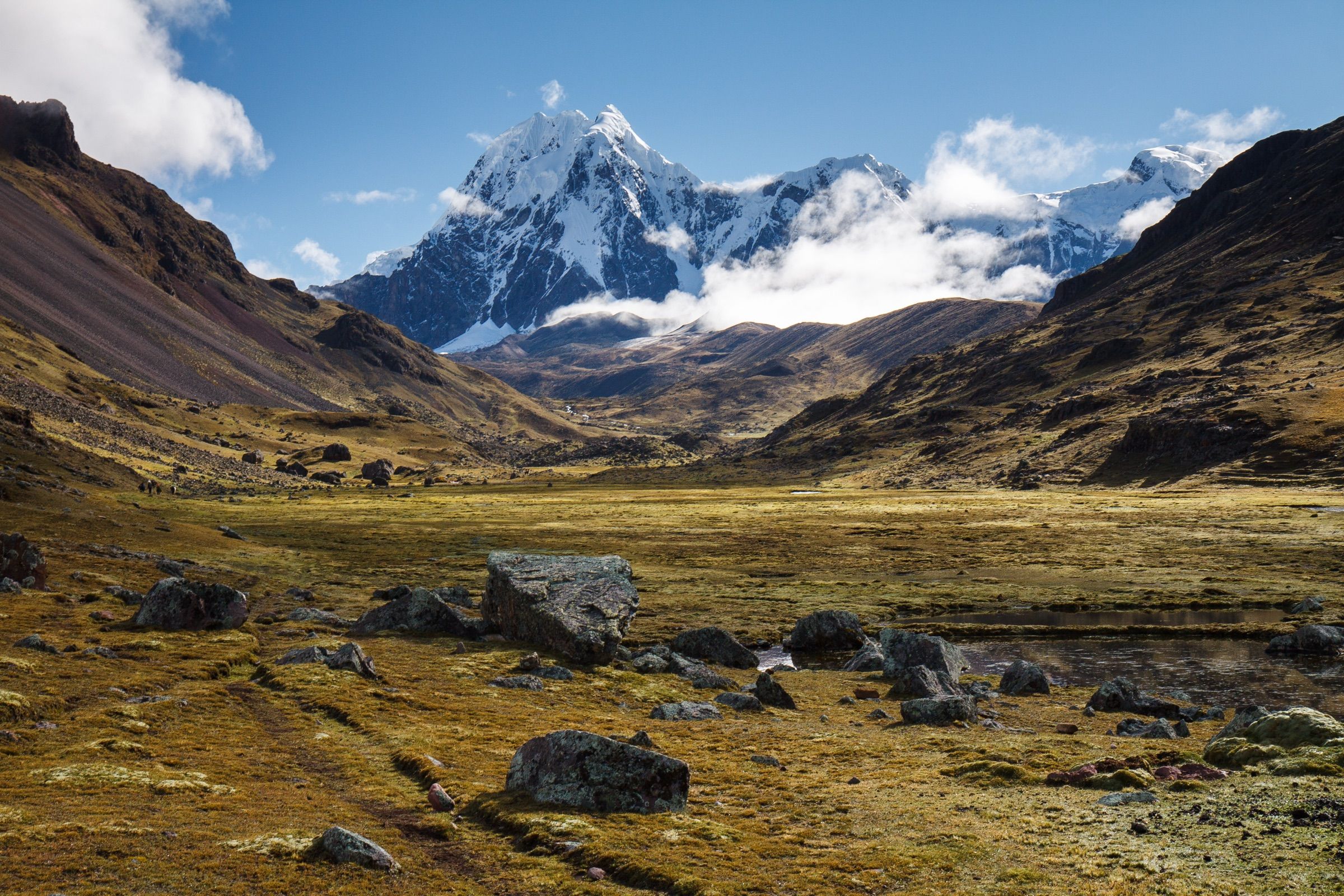
Cusco · Cordillera Vilcanota · Peru
Ausangate Trek
A circuit around Ausangate (6,384 m), the sacred mountain of Cusco, almost entirely above 4,500 m: glacial lakes, herds of alpacas, hot springs at both ends and the highest pass of any classic Peru trek, at about 5,200 m.
From US$1,190 per person
Photo: Petr Meissner, Wikimedia Commons, CC BY 2.0

Is the Ausangate trek for you?
The Ausangate trek loops around Ausangate, at 6,384 m the highest mountain of the Cordillera Vilcanota and a sacred apu for the Quechua communities that herd alpacas on its slopes. The classic circuit starts and ends at Tinki, about three hours from Cusco, covers roughly 67–70 km in five days and crosses the Arapa, Palomani and Campa passes, the highest at about 5,200 m. You camp beside glacial lakes and soak in the hot springs at Upis and Pacchanta.
It is the highest of Peru's classic treks and the quietest of the ones near Cusco. Rainbow Mountain (Vinicunca) lies on the same massif and can be added as a variant; the sign at the top reads 5,036 m, although many operators quote 5,200 m. For other routes from Cusco, see the Salkantay trek or compare everything in our Peru trekking guide.
This is the high one
Your first camp, at Upis, is already around 4,300 m, and most of the trek stays above 4,500 m with nights well below freezing. Coming straight from Cusco (3,400 m) is too fast for most people. Our 7-day version adds two days in the Sacred Valley and Cusco with an acclimatisation hike before Tinki, and we recommend it to anyone who has not been above 4,500 m recently.
Your itinerary
The 5-day Ausangate circuit
About three hours by road to Tinki (about 3,800 m), then a gentle walk to camp at the Upis hot springs, around 4,300 m.
Over the Arapa Pass (about 4,850 m) to a string of glacial lakes under the west face of Ausangate.
The high point of the circuit, about 5,200 m, with views of the Vilcanota glaciers, then down to camp.
Over the Campa Pass (about 5,050 m) and down to the hot springs at Pacchanta.
A short walk to Tinki and the drive back to Cusco.
Recommended: 7 days with acclimatisation
Arrive and sleep lower in the Sacred Valley, then an acclimatisation hike before moving to Cusco.
The five days above. On request we route the circuit past Rainbow Mountain early in the morning, before the day-trip crowds arrive.
Ausangate trek altitude profile
Three passes between 4,850 and 5,200 m, and camps that never drop much below 4,200 m:
- Cusco: 3,400 m
- Upis: 4,300 m
- Arapa Pass: 4,850 m
- Palomani Pass: 5,200 m
- Campa Pass: 5,050 m
- Tinki: 3,800 m
Prices
- 5 days: the Ausangate circuitFrom US$1,190
- 7 days: with acclimatisationFrom US$1,490
Per person in US dollars, based on 2 travellers sharing. Groups of 4 or more pay less per person; solo travellers pay a supplement. We confirm the exact price for your dates and group. Peru prices are based on current market rates for this trek; we confirm the final price with our local partner operator for your dates.
What's included
Included
- Licensed Peruvian trekking guide (through our local partner operator)
- Horsemen, pack horses and an emergency horse
- Camping equipment, cook and all meals on the trek
- Community fees and hot-spring entries
- Private transport Cusco–Tinki–Cusco
Not included
- International flights and Cusco hotels
- Travel insurance with high-altitude rescue (required)
- Sleeping bag rated to about −5 °C (rental available)
- Tips for the trek team
Gear
Typically provided
- Four-season tents and sleeping mats
- Cook, mess tent and meals
- Pack horses for duffel bags
- Emergency oxygen and first-aid kit
You bring
- Sleeping bag rated to about −5 °C
- Down jacket, hat and warm gloves
- Broken-in boots
- Swimwear for the hot springs
- High-factor sunscreen
Safety on the mountain
- Licensed Peruvian guides through a vetted local operator
- Acclimatisation days before the trek on our 7-day plan
- Emergency horse and turn-back plan on the pass days
- Small groups
Ausangate trek FAQ
How hard is the Ausangate trek?
Strenuous. Expect 6–7 hours a day at 4,500–5,000 m, three passes up to about 5,200 m and nights well below freezing. It is not technical, but it is the highest of the classic Peru treks and suits hikers with previous experience at altitude.
Ausangate or Salkantay?
Salkantay ends at Machu Picchu and drops into warm cloud forest after one high pass. Ausangate stays high the whole way, with three passes up to about 5,200 m, fewer people and no Machu Picchu at the end. Many trekkers do Ausangate first to acclimatise, then Salkantay or the Inca Trail.
Does the Ausangate trek include Rainbow Mountain?
The classic circuit does not, but Rainbow Mountain (Vinicunca, 5,036 m on the summit sign) sits on the same massif. On request we route the trek past it early in the morning, before the day-trip groups arrive.
How cold is it on the Ausangate trek?
From June to August nights fall well below freezing at the camps. Bring a sleeping bag rated to about −5 °C, a down jacket and warm gloves; days are usually sunny and mild.
When is the best time for the Ausangate trek?
May to September is the dry season, with the clearest skies in July and August. April and October are possible but colder and less stable.
How much does the Ausangate trek cost?
From US$1,190 per person for the 5-day camping trek and from US$1,490 for the 7-day version with acclimatisation, for two travellers sharing. We confirm the final price with our local partner for your dates.
Plan your Ausangate trek
Tell us your dates, your experience at altitude and whether you want the Rainbow Mountain variant, and we will build the circuit with the right acclimatisation.