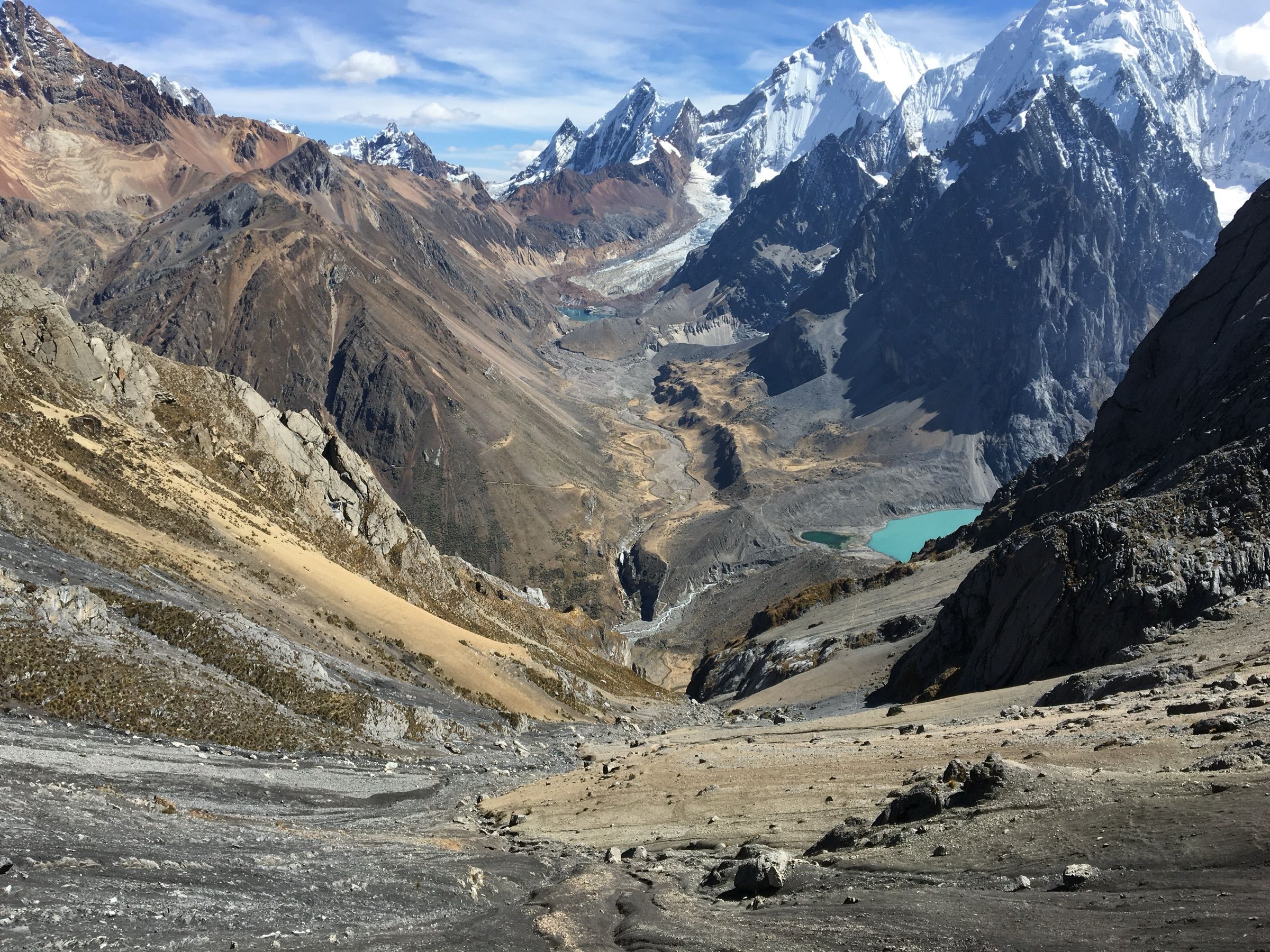
Huaraz · Cordillera Huayhuash · Peru
Huayhuash Trek: The Cordillera Huayhuash Circuit
Ten days of camping around a compact range with seven summits over 6,000 m, glacial lakes under the ice and passes close to 5,000 m. It is remote and hard, and the views from the passes are the reason people come back.
From US$2,190 per person
Photo: brice pollock, Wikimedia Commons, CC BY 2.0

Is the Huayhuash trek for you?
The Huayhuash trek circles the Cordillera Huayhuash, a compact range south of Huaraz with seven peaks over 6,000 m, including Yerupajá (6,635 m), Peru's second-highest mountain, and Siula Grande, the face Joe Simpson descended in Touching the Void. The full circuit runs about 110–130 km over 8 or more passes between 4,600 and 5,090 m, past Carhuacocha, Jahuacocha and the three lakes under Siula.
It is a camping trek from start to finish. Arrieros (local muleteers) carry the camp on donkeys, you walk with a daypack, and there is almost no phone signal on the route. Eight communities charge entry fees along the way. It suits experienced hikers who are comfortable with long days at altitude. To compare it with Peru's other big treks, see our Peru trekking guide.
Acclimatise in Huaraz before you start
The circuit spends most of its time above 4,000 m and crosses its first pass on day two. Arriving from Lima at sea level and driving straight to the trailhead is how people end up turning back. We plan at least two days in Huaraz (3,050 m) with day hikes to glacier lakes above the town before the drive in. In 2026 the communities began turning back unguided groups at Llamac, according to local outfitters; we only run the circuit with a licensed guide and arriero team anyway.
Your itinerary
The 12-day Huayhuash circuit
Arrive in Huaraz (3,050 m) and walk to glacier lakes above the town on two day hikes to prepare for the altitude.
Five to seven hours by road to the first camp at the north end of the range.
First pass of the circuit (about 4,700 m), then down to the Janca camp.
Over Carhuac (about 4,650 m) to Carhuacocha lake, with Yerupajá and Siula Grande reflected in the water on a calm morning.
Past the Siula, Quesillo and Gangrajanca lakes to the Siula pass (about 4,800–4,830 m).
Over the Portachuelo (about 4,750 m) and down to the Viconga hot springs.
The highest ground of the circuit, around 5,000 m, with the Cordillera Raura on the horizon.
A short, steep climb to about 5,050 m for the classic view of Siula Grande, then down to Huayllapa.
Two more passes (about 4,800 and 4,850 m) on the way back north.
To Jahuacocha lake, under the north faces of Yerupajá and Jirishanca.
Over Pampa Llamac (about 4,300 m), down to Llamac and the drive back to Huaraz.
Shorter: the 8-day circuit
Covers the eastern half and the Carhuacocha and three-lakes section, finishing at Huayllapa or Pocpa. A good option if you have less time, still with acclimatisation days in Huaraz.
Huayhuash trek altitude profile
Almost every day crosses a pass between 4,600 and 5,090 m. Pass heights differ by 30–50 m between maps; these are rounded figures.
- Huaraz: 3,050 m
- Cacanan Pass: 4,700 m
- Carhuac Pass: 4,650 m
- Cuyoc Pass: 5,000 m
- San Antonio Pass: 5,050 m
- Pampa Llamac: 4,300 m
Prices
- 12 days: full circuit from HuarazFrom US$2,890
- 8 days: short circuitFrom US$2,190
Per person in US dollars, based on 2 travellers sharing. Groups of 4 or more pay less per person; solo travellers pay a supplement. We confirm the exact price for your dates and group. Peru prices are based on current market rates for this trek; we confirm the final price with our local partner operator for your dates.
What's included
Included
- Licensed Peruvian trekking guide (through our local partner operator)
- Arrieros, donkeys and an emergency horse
- Full camping equipment and a cook, all meals on the trek
- Private transport Huaraz–trailhead–Huaraz
- Community entry fees
Not included
- International flights and the Lima–Huaraz transfer
- Hotels in Huaraz
- Travel insurance with high-altitude rescue (required)
- Sleeping bag rental and tips for the trek team
Gear
Typically provided
- Tents, mess tent and sleeping mats
- Cook and all trek meals
- Donkeys and an emergency horse
- Satellite communication with the guide
You bring
- Four-season sleeping bag (nights below 0 °C)
- Broken-in boots and gaiters
- Warm layers and a down jacket
- Cash in soles for community fees
- Water filter or purification tablets
Safety on the mountain
- Licensed Peruvian guides through a vetted local operator
- Acclimatisation days in Huaraz before the trailhead
- Satellite communication on a route with almost no signal
- Turn-back and evacuation plan with the arriero team
Huayhuash trek FAQ
How hard is the Huayhuash trek?
It is one of the hardest treks in Peru: 10 or more days of camping, most nights above 4,000 m and passes up to about 5,050 m. There is no technical climbing. What it asks for is strong fitness and previous multi-day trekking at altitude.
Do you need a guide for the Huayhuash circuit?
In 2026 local outfitters report that the communities turn back unguided groups at Llamac. We have not seen an official document, so check before you go; our trips always run with a licensed guide and arrieros.
How much are the Huayhuash community fees?
Eight communities charge fees along the circuit, about S/280–300 per person in total in late 2025, paid in cash. On our trips the fees are included.
How many days do I need for the Huayhuash trek?
Plan 12 days from Huaraz for the full circuit with acclimatisation, or 8 days for the shorter version. Add the travel from Lima, which takes about 8 hours by road.
When is the best time for the Huayhuash trek?
May to September, with the driest weather from June to August. Avoid December to February, the rainy season.
How much does the Huayhuash trek cost?
From US$2,890 per person for the 12-day circuit and US$2,190 for the 8-day version, for two travellers sharing, including community fees. We confirm the final price with our partner in Huaraz for your dates.
Plan your Huayhuash trek
Tell us your dates, how many of you are travelling and your trekking experience at altitude, and we will build the circuit with acclimatisation days in Huaraz.