Cusco · Apurímac canyon · Peru
Choquequirao Trek
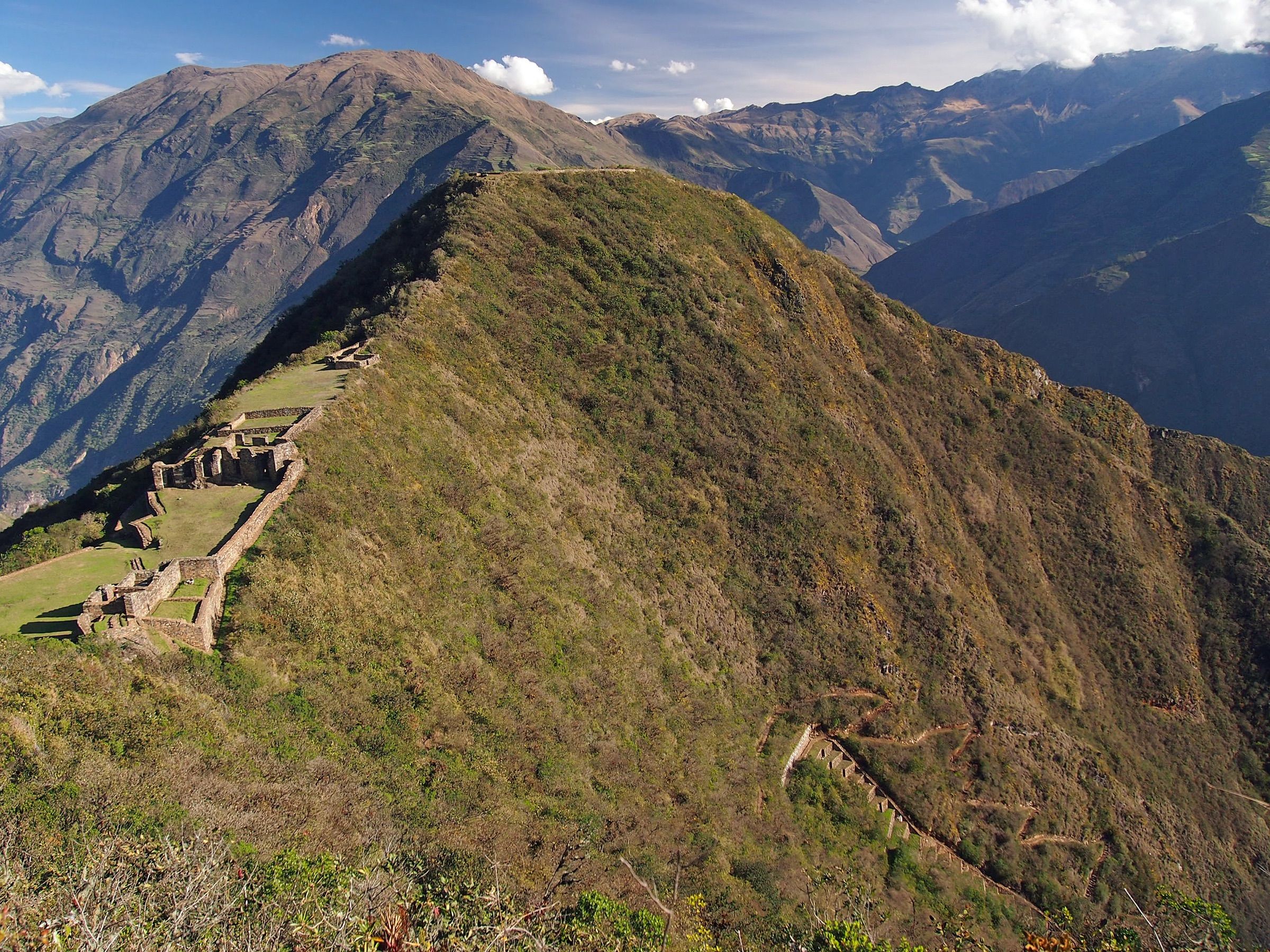
An Inca city on a ridge above the Apurímac canyon, reached only on foot and visited by about 8,000 people a year, against thousands a day at Machu Picchu. Walk there and back in five days, or carry on over the mountains to Machu Picchu in ten.
From US$1,190 per person
Photo: McGhiever, Wikimedia Commons, CC BY-SA 4.0

Is the Choquequirao trek for you?
The Choquequirao trek leads to a large Inca site of plazas, temples and terraces spread along a ridge at about 3,050 m, with white-stone llamas set into one of the terrace walls. Only 30–40% of it has been cleared. There is no road and no train; the only way in is a trail that drops about 1,400 m from the Capuliyoc viewpoint to the Apurímac river and climbs about 1,500 m up the other side.
The five-day trip goes there and back from Cachora. The ten-day traverse continues north over three passes, the highest around 4,650 m, joins the Salkantay route in the cloud forest and finishes at Machu Picchu. They are two different treks: the first is about heat and steep canyon walls, the second adds real altitude. A cable car has been planned since 2013; the contract was not yet awarded in 2026, so for now Choquequirao is still a walking-only site. Compare it with Peru's other routes in our Peru trekking guide, or see the Salkantay trek, which shares the last days of the traverse.
The hard part is the canyon, not the altitude
On the five-day trip you never go above about 3,050 m, yet many people find it harder than Salkantay. The trail drops to the Apurímac at about 1,500 m and climbs straight back up, in full sun, with sandflies at the river camp. We start the descents early in the morning, use mules for the bags and set a pace that leaves energy for the site itself. The traverse to Machu Picchu is a different matter: plan two or three days in Cusco first, because the Yanama pass reaches about 4,650 m.
Your itinerary
The 5-day Choquequirao trek
About four hours by road to Cachora (2,900 m), then from the Capuliyoc viewpoint down to camp at Chiquisca, around 1,900 m.
Down to the river at Playa Rosalina (about 1,500 m), over the bridge and the long, hot climb to Marampata (about 2,900 m).
A full day at the site: the main plaza, the terraces and the llama walls, often with no one else in sight.
Return down the canyon and part of the way up the far side to Chiquisca.
The final climb to Capuliyoc, then the drive back to Cusco.
The 10-day traverse to Machu Picchu
As on the 5-day trek, ending with a full day at the site.
Over the ridge (about 3,300 m) past the Pinchiunuyoc terraces and down to Río Blanco, around 2,000 m.
A steep climb out of the valley to Maizal, about 3,000 m.
Past old silver mines to the San Juan pass (about 4,150 m), then down to Yanama (about 3,550 m).
The highest point of the traverse, about 4,650 m, then down towards Totora.
Down to Lucmabamba (about 1,800 m), where the route joins the Salkantay trail among coffee farms.
Over the Llactapata ridge (about 2,700 m) with a first view of Machu Picchu, then on to Aguas Calientes.
A guided visit to Machu Picchu and the train back to Cusco.
Choquequirao trek altitude profile
The 10-day traverse in one line: a deep canyon, the site on its ridge, then three passes before the descent to Machu Picchu.
- Cachora: 2,900 m
- Apurímac river: 1,500 m
- Choquequirao: 3,050 m
- Río Blanco: 2,000 m
- Yanama pass: 4,650 m
- Lucmabamba: 1,800 m
- Machu Picchu: 2,430 m
Prices
- 5 days: Choquequirao and backFrom US$1,190
- 10 days: traverse to Machu PicchuFrom US$2,290
Per person in US dollars, based on 2 travellers sharing. Groups of 4 or more pay less per person; solo travellers pay a supplement. We confirm the exact price for your dates and group. Peru prices are based on current market rates for this trek; we confirm the final price with our local partner operator for your dates.
What's included
Included
- Licensed Peruvian trekking guide (through our local partner operator)
- Camping equipment, cook and all meals on the trek
- Mules and muleteer for your bags
- Choquequirao entry fee; on the traverse, Machu Picchu ticket and train
- Private transport Cusco–Cachora
Not included
- International flights and Cusco hotels
- Travel insurance (required)
- Sleeping bag rental
- Tips for the trek team
Gear
Typically provided
- Tents, mess tent and sleeping mats
- Cook and all trek meals
- Mules for duffel bags
- First-aid kit
You bring
- Light, breathable layers for the canyon heat
- Warm layers for the passes on the traverse
- Strong insect repellent (sandflies)
- Sun hat and high-factor sunscreen
- Trekking poles for the descents
Safety on the mountain
- Licensed Peruvian guides through a vetted local operator
- Early starts to avoid the midday canyon heat
- Acclimatisation days in Cusco before the traverse
- Small groups
Choquequirao trek FAQ
How hard is the Choquequirao trek?
Hard, mainly because of the canyon: about 1,400 m down to the Apurímac and 1,500 m back up, in heat. The 5-day trip stays below about 3,050 m. The traverse to Machu Picchu adds passes up to about 4,650 m and is harder again.
How many days do you need for Choquequirao?
Plan 4–5 days to go there and back from Cachora; five gives you a full day at the site. To continue to Machu Picchu, plan 9–10 days.
Do you need a permit for the Choquequirao trek?
No advance permit and no daily quota. There is an entry fee paid at the Capuliyoc checkpoint, reported at about S/60 for foreign adults; on our trips it is included.
Is there a cable car to Choquequirao?
Not yet. A cable car has been planned since 2013. In 2026 the project had five prequalified bidders, with the award targeted for the end of the year and construction after that. Until it is built, the site remains walk-in only.
When is the best time to trek to Choquequirao?
The dry season runs from May to September; April, May, September and October are good shoulder months with fewer people. From December to March the canyon trail is wet and slippery.
How much does the Choquequirao trek cost?
From US$1,190 per person for the 5-day trek and US$2,290 for the 10-day traverse to Machu Picchu, for two travellers sharing. We confirm the final price with our partner in Cusco for your dates.
Plan your Choquequirao trek
Tell us your dates and whether you want the 5-day trek or the 10-day traverse to Machu Picchu, and we will build it with the right pace for the canyon.