Galápagos · Planning
Galápagos Without a Cruise: Land-Based vs Cruise (Honest Guide)
The Galápagos has a reputation as a cruise destination — and most articles you’ll read quietly assume you’ll book one. But you absolutely can do the Galápagos without a cruise, and for active travellers, doing it land-based and on foot is often the better trip. Here’s an honest, structured comparison so you can decide which suits you — including the wildlife you genuinely miss, and the real cost difference.
The short answer
- Choose land-based if you want flexibility, a lower cost, full days hiking the trails, evenings in the island towns, and a more active, independent trip.
- Choose a cruise if your priority is reaching the remote outer islands, you want everything organised onto a boat, and hiking isn’t the focus.
Neither is “better” — they’re different trips. The rest of this guide breaks it down, row by row.
Land-based vs cruise: the honest comparison
| Land-based hiking | Cruise | |
|---|---|---|
| Cost | Lower — pay per night + per day tour (~30–50% less) | Higher — all-inclusive premium |
| Wildlife access | ~70–80% of headline species, on the main islands | Adds the remote outer islands |
| Hiking & trails | The focus — full days on foot | Limited — short guided landings |
| Islands reached | Santa Cruz, Isabela, San Cristóbal, Floreana + day-tour sites | More islands, incl. remote outer ones |
| Flexibility | High — choose your days, islands & pace | Low — fixed boat itinerary |
| Nights | In island towns (hotels, restaurants) | On the boat |
| Seasickness | Rare — no overnight sailing | Possible on crossings |
| Best for | Active, independent travellers & families | Reaching far islands, full convenience |
Cost: land-based is the more affordable trip
A Galápagos cruise is an all-inclusive premium product — you’re paying for the boat, the crew, the cabins and the convenience, and prices climb steeply for better vessels. Land-based travel costs less, often 30–50% less for a comparable number of days, because you pay separately for simple island accommodation, meals in town and the specific day tours you choose.
A few costs apply either way: the $200 Galápagos National Park entrance fee (for foreign adults, raised in 2024), the transit control card, and your flights from Quito or Guayaquil. After that, land-based lets you dial the budget up or down — budget hostels to mid-range hotels — in a way a fixed cruise fare can’t.
Wildlife: the honest myth-bust
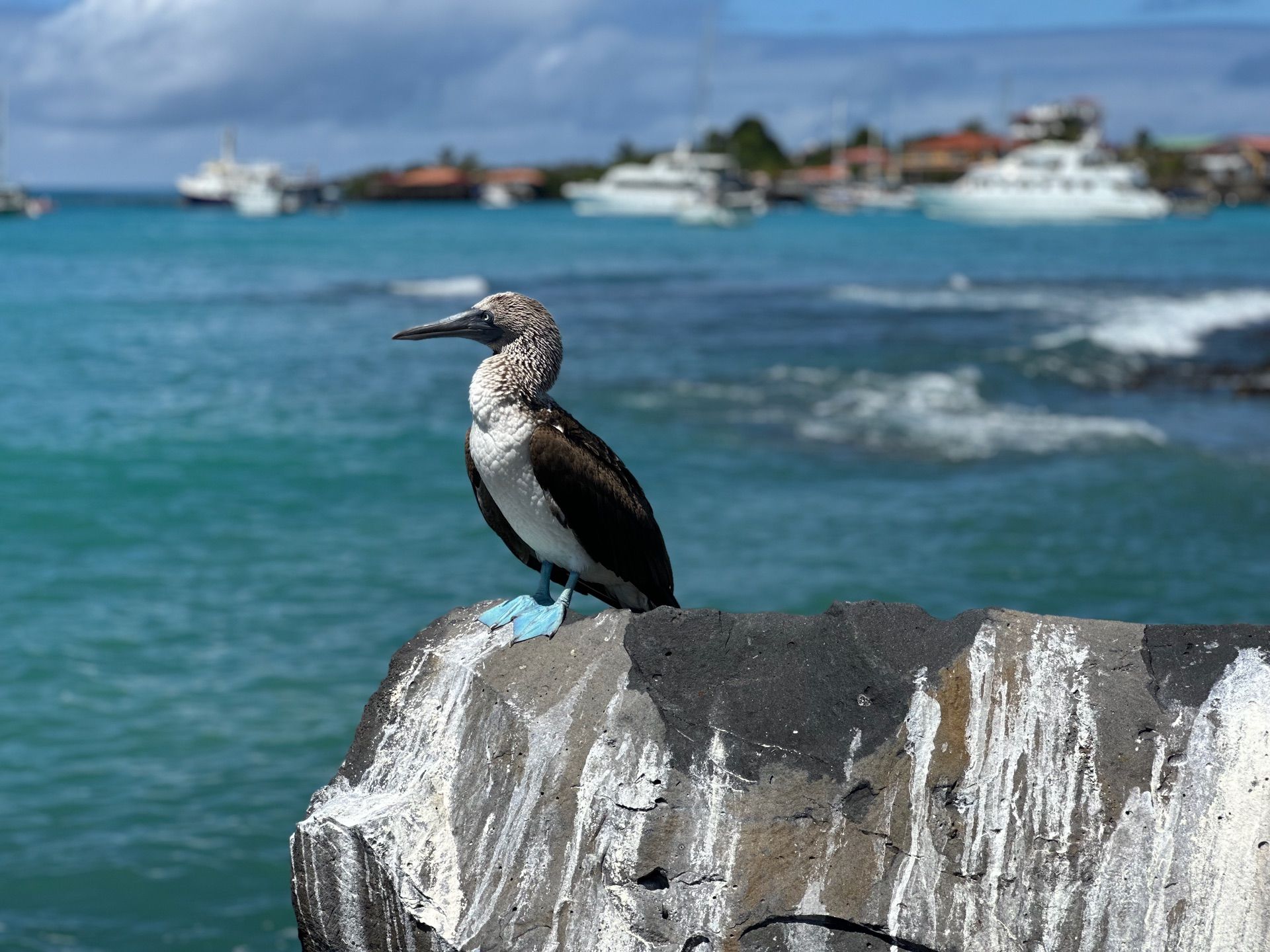
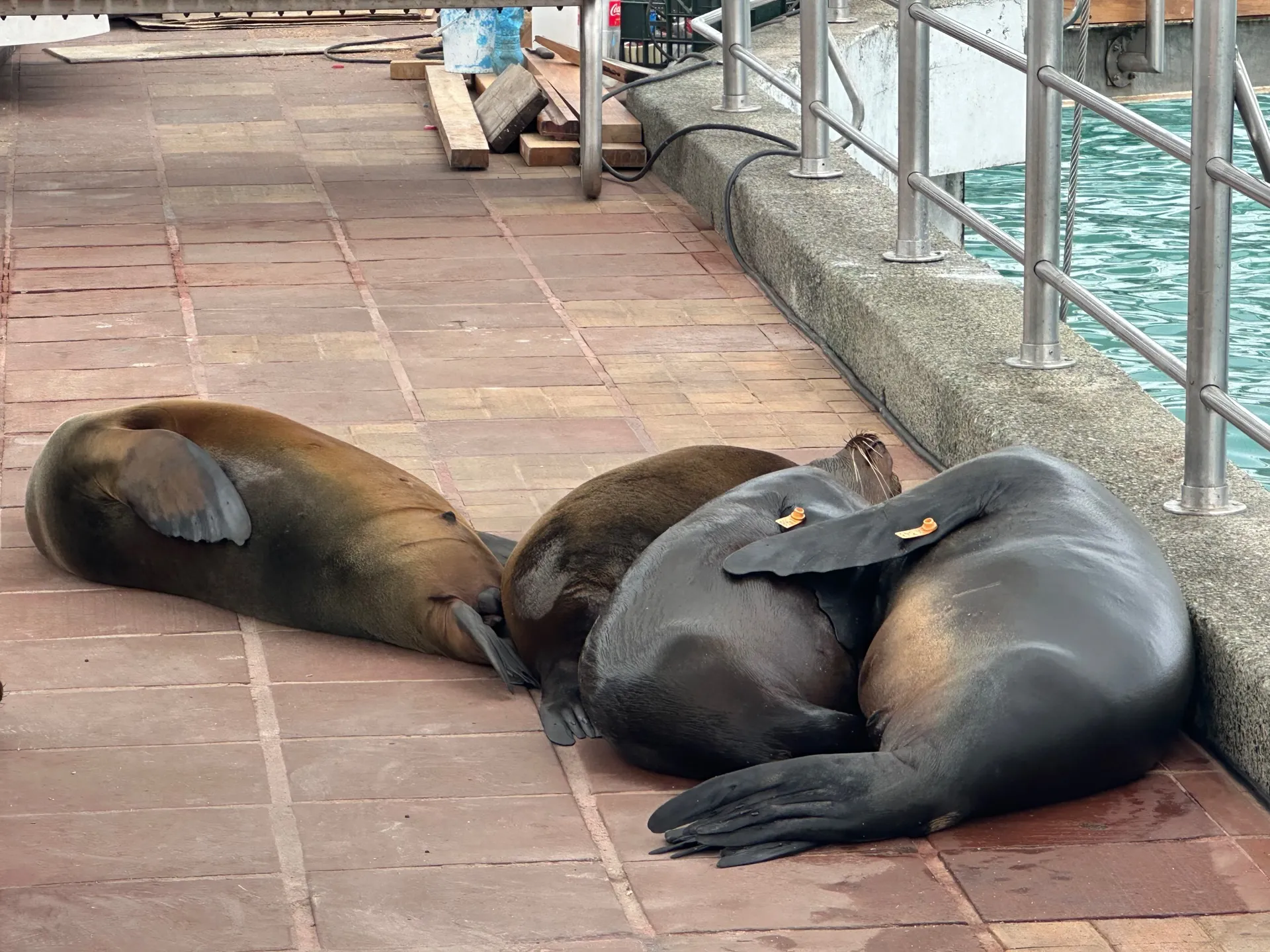
The big worry is that you’ll “miss the wildlife” without a cruise. Mostly, you won’t. The inhabited islands — Santa Cruz, Isabela and San Cristóbal — are extraordinarily rich: giant tortoises, marine iguanas, sea lions, blue-footed boobies, Galápagos penguins, sharks and rays are all accessible on foot or a short day boat. That’s roughly 70–80% of the species most people come to see.
Here’s what land-based genuinely can’t reach — and we’d rather be honest about it than oversell:
- Española — the waved albatross (seasonal) and the dramatic blowhole.
- Genovesa — the red-footed boobies and a famous seabird colony.
- Fernandina — the flightless cormorants and the most pristine island.
- Wolf & Darwin — liveaboard dive sites for hammerheads and whale sharks.
If one of those specific experiences is your dream, a cruise earns its price. For everyone else, the main islands deliver the Galápagos.
Hiking: this is where land-based wins outright
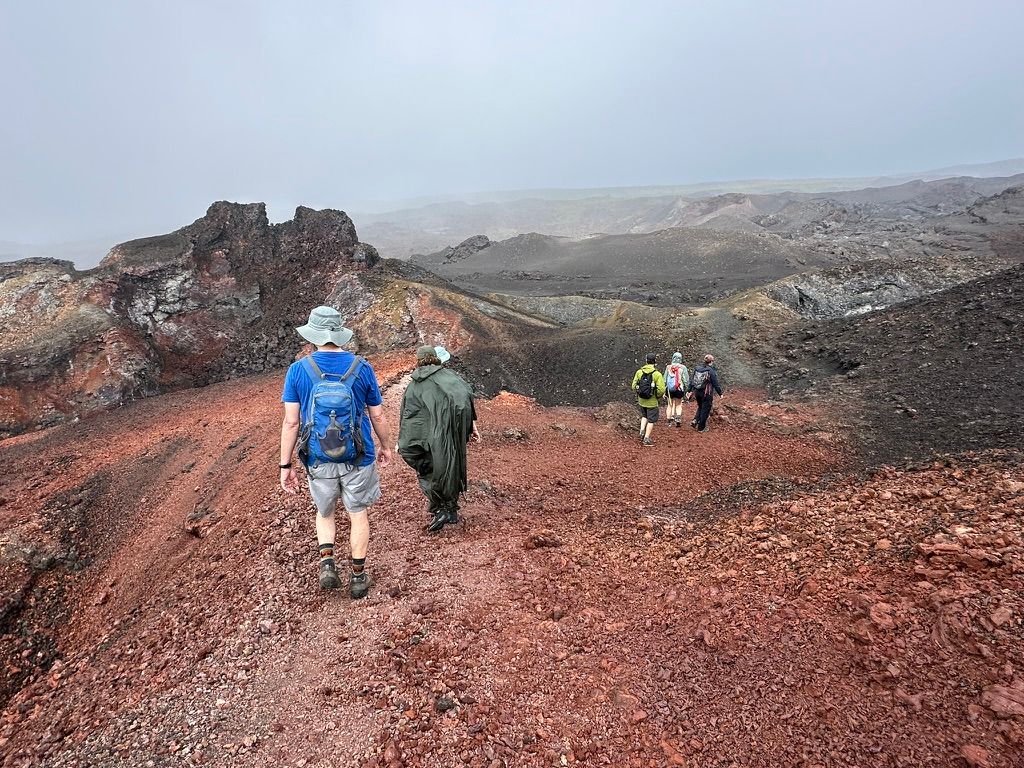
On a cruise, walking is limited to short, guided landings — an hour or two ashore before the zodiac takes you back to the boat. Land-based travel lets you spend full days on the trails: the Sierra Negra volcano trek, the Wall of Tears, the Santa Cruz highlands and the San Cristóbal coast. If hiking is why you’re going, land-based isn’t just an option — it’s the whole point. (See the best hikes in the Galápagos for the full list.)
Flexibility, pace and island life
A cruise runs on a fixed schedule: the boat moves overnight and you follow the itinerary. Land-based travel is yours to shape — linger an extra day on the island you love, swap a beach day for a volcano hike, eat where the locals eat, start early or sleep in. You also get the island towns themselves — Puerto Ayora and Puerto Villamil have a relaxed, real-Galápagos feel a cruise never touches.
Which islands can you visit without a cruise?
You base yourself on the four inhabited islands and hop between them by speedboat ferry (around $30–40 each way, a couple of hours):
- Santa Cruz (Puerto Ayora) — the hub: Tortuga Bay, the highlands, tortoise reserves.
- Isabela (Puerto Villamil) — Sierra Negra, the Wall of Tears, Las Tintoreras.
- San Cristóbal (Puerto Baquerizo Moreno) — Cerro Tijeretas, El Junco, Kicker Rock.
- Floreana — quieter, with its own history and highlands.
From these, day tours reach nearby sites like Bartolomé and Los Túneles. Only the far outer islands (Genovesa, Fernandina, Española, Wolf, Darwin) need a cruise.
How many days do you need?
To match what a cruise covers, plan at least 5–7 nights, split across two or three islands. That’s enough for the headline hikes, the highlands and unhurried wildlife time without spending your trip on ferries.
Who should still take a cruise?
To be fair to cruising: it’s the right call if you want to reach the far-flung outer islands in one trip, if you prefer total convenience with zero logistics, or if you’d rather see many sites quickly and hiking isn’t a priority. There’s no shame in it — it’s simply a different trip.
Our take: hike it, land-based
For active travellers, the Galápagos on foot is one of the great walking experiences on Earth — and you don’t need a boat to do it. A multi-day, land-based hiking trip across Isabela, Santa Cruz and San Cristóbal gives you the wildlife, the trails, the towns and the freedom, at a fraction of a cruise’s cost.
See the islands the way few people do: on foot, close to the wildlife, sleeping in island towns. That’s what our Galápagos hiking trips are built around — and you can start by browsing the best hikes in the Galápagos.
Frequently asked questions
Can you visit the Galápagos without a cruise?
Yes — easily. You fly in and base yourself in hotels on the inhabited islands (Santa Cruz, Isabela, San Cristóbal and Floreana), travelling between them by speedboat ferry and exploring on foot and by day tour. It's a popular, well-established way to see the islands.
Is a land-based Galápagos trip cheaper than a cruise?
Generally yes — often 30–50% less. A cruise is an all-inclusive premium product (boat, crew, cabins); land-based, you pay per night for simple island hotels plus the day tours you choose. The $200 national-park fee and flights apply either way.
What wildlife do you miss without a cruise?
Honestly, the remote outer islands: the waved albatross of Española, the red-footed boobies of Genovesa, and the flightless cormorants of Fernandina — plus liveaboard dive sites like Wolf and Darwin. But the main islands hold ~70–80% of the headline species: tortoises, marine iguanas, sea lions, penguins, boobies and sharks.
How many days do you need for a land-based Galápagos trip?
Plan at least 5–7 nights to do it justice and match what a cruise covers. Spread across two or three islands (e.g. Santa Cruz + Isabela + San Cristóbal), that's enough for the best hikes, the highlands and the wildlife without rushing the ferries.
Which islands can you visit without a cruise?
The four inhabited islands: Santa Cruz (Puerto Ayora), Isabela (Puerto Villamil), San Cristóbal (Puerto Baquerizo Moreno) and Floreana. From them, day tours reach nearby sites like Bartolomé, Las Tintoreras and Kicker Rock. Only the far outer islands need a cruise.
Do you get seasick on a land-based Galápagos trip?
Far less than on a cruise — you sleep on solid ground, not a moving boat. The inter-island speedboat ferries can be bumpy for a couple of hours, but there's no overnight sailing, so seasickness is rarely a real issue.
Can you hike the Galápagos without a cruise?
Absolutely — and it's the best reason to skip the cruise. Land-based, you get full days on the trails: the Sierra Negra volcano, the Wall of Tears, Tortuga Bay and the highlands. A cruise only allows short, guided landings before returning to the boat.
Land-based or cruise — which is better for first-timers and families?
Land-based usually wins for families and independent travellers: more space, evenings in the island towns, flexible pacing and lower cost. A cruise suits those who want total convenience, no logistics, and to reach the remote islands in one trip.