Galápagos · Trail guide
The Best Hikes in the Galápagos Islands (Trail Specs & Guide Rules)
Most “best hikes in the Galápagos” lists tell you a place is beautiful and stop there. They rarely tell you how far it is, how hard it is, how long it takes, or whether you’re allowed to walk it alone. That’s the information you actually need to plan a land-based Galápagos hiking trip — so that’s what this guide leads with.
Every hike below is reachable on a land-based trip (no cruise needed for the island ones), organised by island, each with real trail specs and the single most-confusing detail for visitors: whether a licensed naturalist guide is required.
The best Galápagos hikes at a glance
| Hike | Island | Distance | Difficulty | Time | Guide? | Cost |
|---|---|---|---|---|---|---|
| Sierra Negra & Volcán Chico | Isabela | ~16 km | Moderate | 5–6 h | Yes | Tour |
| Wall of Tears | Isabela | ~12 km | Easy–mod | 3–4 h | No | Free |
| Las Tintoreras | Isabela | ~1 km + boat | Easy | ~2 h | Yes | Tour |
| Tortuga Bay | Santa Cruz | ~5 km | Easy | 2–3 h | No | Free |
| Los Gemelos | Santa Cruz | ~1 km | Easy | <1 h | No | Free |
| Cerro Crocker / Media Luna | Santa Cruz | ~10 km | Moderate | 4–6 h | Rec. | Free |
| Cerro Tijeretas | San Cristóbal | ~2 km | Easy | 1–2 h | No | Free |
| El Junco crater lake | San Cristóbal | ~2 km | Easy | ~1 h | No | Free |
| La Lobería | San Cristóbal | ~3 km | Easy | 1–2 h | No | Free |
| Bartolomé viewpoint | Bartolomé | ~0.6 km | Easy | ~1 h | Yes | Boat/cruise |
| Sullivan Bay lava | Santiago | ~2 km | Easy | 1–2 h | Yes | Boat/cruise |
| Punta Suárez | Española | ~2 km | Easy–mod | 2–3 h | Yes | Boat/cruise |
The golden rule: national-park visitor sites generally require a licensed naturalist guide; town-edge and beach trails usually don’t. When in doubt, assume a guide is needed — and a land-based hiking trip handles all of it for you.
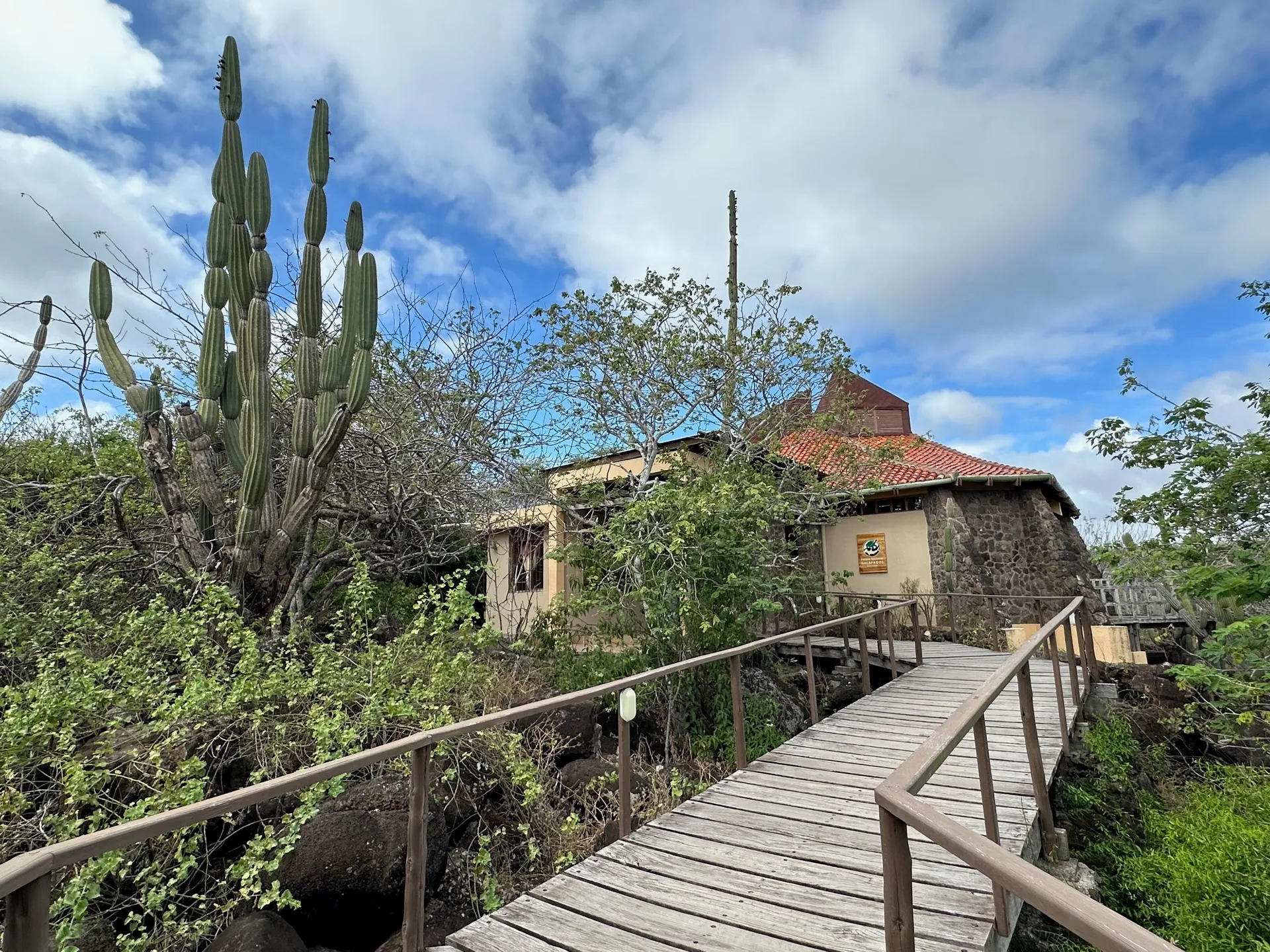
Isabela Island — the volcano island
Isabela is the best island for hiking, full stop. See the full Isabela hiking guide for a multi-day plan.
1. Sierra Negra & Volcán Chico — the Galápagos trek
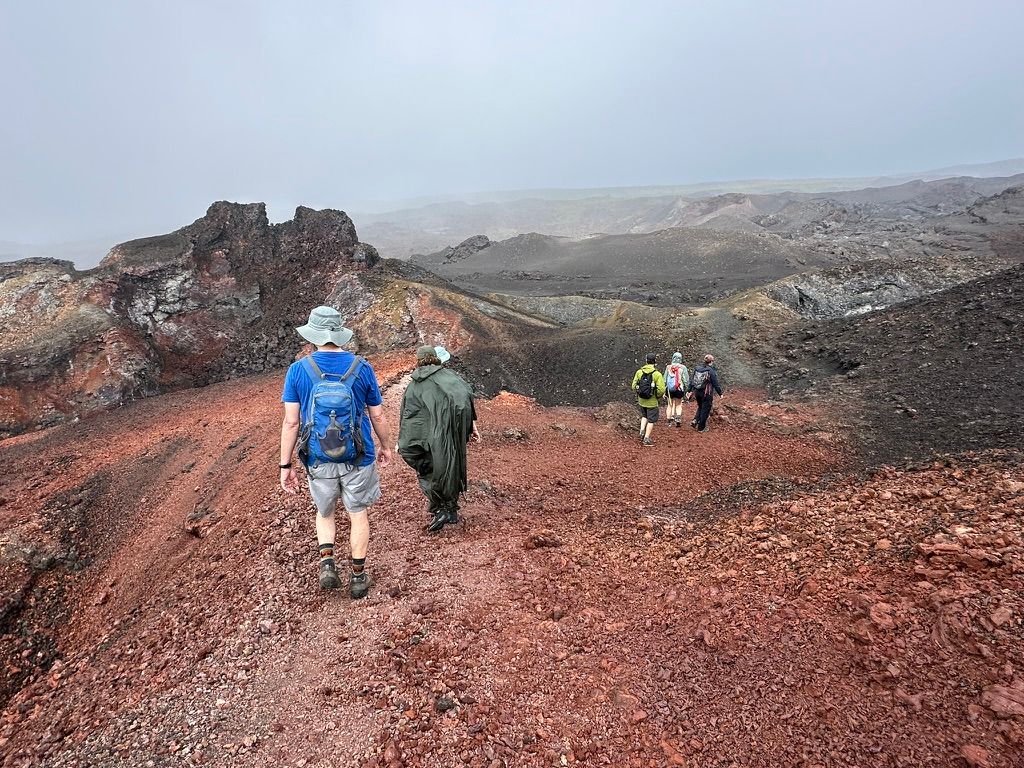
The standout hike in the islands: a roughly 16 km round trip across one of the largest active calderas on Earth, continuing to the steaming, multicoloured lava fields of Volcán Chico. Moderate, but exposed and often muddy at the start. A naturalist guide is required. Read the dedicated Sierra Negra volcano hike guide.
2. Wall of Tears — history on foot
A flat ~12 km coastal trail to a haunting wall built by penal-colony prisoners, passing giant tortoises, brackish lagoons and the Cerro Orchilla viewpoint. Self-guided, free. See the Wall of Tears guide.
3. Las Tintoreras — sharks in the lava
A short guided walk and panga ride to a lava islet where white-tipped reef sharks rest in a channel, alongside penguins, sea lions and marine iguanas. Guide required.
Santa Cruz — coast and green highlands
The most accessible island, with a brilliant beach walk and an underrated highland trek. See the Santa Cruz hiking guide.
4. Tortuga Bay — the classic beach trail
An easy, paved ~2.5 km each way trail from Puerto Ayora to a long white beach with marine iguanas and a calm lagoon. Self-guided, free, and one of the best short walks in the islands.
5. Los Gemelos — twin sinkholes in the Scalesia forest
A short, easy walk to a pair of dramatic collapsed craters surrounded by misty Scalesia cloud forest — a quick highland stop, often paired with the giant-tortoise reserves. Self-guided.
6. Cerro Crocker & Media Luna — the highland trek
The island’s most genuine hike: a ~10 km route up through Scalesia and Miconia forest toward Media Luna and Cerro Crocker, the high interior. Often misty and muddy — a guide is recommended for navigation and to enter park areas.
San Cristóbal — the walkable island
Many of San Cristóbal’s best trails start right from town. See the San Cristóbal hiking guide.
7. Cerro Tijeretas — easy, self-guided, brilliant
A short walk to a frigatebird-filled viewpoint, a snorkel cove and Darwin’s first landing site. Self-guided. Read the Cerro Tijeretas guide.
8. El Junco crater lake
A short highland loop around one of the only freshwater lakes in the Galápagos, alive with frigatebirds bathing on the wing. Easy, self-guided.
9. La Lobería — the sea-lion coast
An easy coastal trail to a beach owned by sea lions, with marine iguanas and good surf. Self-guided; watch the tides.
Hikes that need a boat or cruise
A few classic Galápagos walks sit on uninhabited islands you can only reach by a guided day-tour boat or a cruise — worth knowing about even on a land-based trip:
- Bartolomé — the staircase to the Pinnacle Rock viewpoint, the islands’ most famous panorama.
- Sullivan Bay (Santiago) — a surreal walk across a vast field of frozen pāhoehoe lava.
- Punta Suárez (Española) — a seabird trail with waved albatross, boobies and blowholes.
- North Seymour — a flat loop through frigatebird and blue-footed booby colonies.
All of these require a licensed naturalist guide and a boat; the island trails above don’t.
Do you need a guide to hike in the Galápagos?
It’s the most common question, and the answer is: it depends on the trail.
- Town-edge and beach trails (Tortuga Bay, Cerro Tijeretas, El Junco, La Lobería, Wall of Tears) — you can walk these independently.
- National-park visitor sites (Sierra Negra, Las Tintoreras, all the boat-accessed islands) — a licensed naturalist guide is required by law.
On a land-based hiking trip this is all arranged for you — guides where they’re needed, logistics for the rest.
The best way to hike the Galápagos: land-based, multi-day
You don’t need a cruise to hike the Galápagos. The most rewarding way to do it is a multi-day, land-based itinerary — sleeping in the island towns, walking the best trails by day, and travelling between islands by ferry. It’s more flexible, more affordable and far more active than a cruise. (See our honest land-based vs cruise comparison.)
Combine the best of these hikes across Isabela, Santa Cruz and San Cristóbal into one trip. That’s exactly what our Galápagos hiking trips are built around.
When is the best time to hike the Galápagos?
The Galápagos is a year-round hiking destination. The warm/wet season (December–May) brings hotter, sunnier days with short showers and calm seas; the cool/dry season (June–November) is cooler, mistier in the highlands and better for active hiking underfoot. Either way, bring sun protection, plenty of water and a light rain layer for the highlands.
Frequently asked questions
Can you hike in the Galápagos without a guide?
Some trails, yes. Town-edge and beach walks — Tortuga Bay, Cerro Tijeretas, El Junco, La Lobería and the Wall of Tears — you can do independently. National-park sites like Sierra Negra and Las Tintoreras, and all boat-accessed hikes, require a licensed naturalist guide by law.
Which island is best for hiking in the Galápagos?
Isabela — it has the standout volcano trek (Sierra Negra & Volcán Chico), the Wall of Tears coastal trail and the most varied walking. Santa Cruz and San Cristóbal add brilliant beach and highland trails, and most travellers combine two or three islands.
How hard are the hikes in the Galápagos?
Mostly easy to moderate. Most are short, flat coastal or highland walks. The one genuinely demanding hike is Sierra Negra (~16 km), and even that is about distance and heat rather than steep climbing. There's no altitude to worry about.
Do you need a naturalist guide for Galápagos trails?
For any national-park visitor site, yes — Galápagos National Park requires a certified naturalist guide. Self-guided walks are limited to town-edge trails and a few beaches. A land-based trip arranges guides only where they're legally required.
Can you hike the Galápagos land-based, without a cruise?
Yes — and it's the best way to hike. You fly in, sleep in the island towns, walk the trails by day, and travel between islands by ferry. Every land-accessible hike on this list can be done without ever booking a cruise. (See our land-based vs cruise comparison.)
How long is the Sierra Negra volcano hike?
About 16 km round trip including the Volcán Chico lava fields — roughly 5–6 hours. It's the longest and most rewarding hike in the Galápagos and the only one most people would call a real trek.
What is the best time of year to hike the Galápagos?
It hikes well year-round. The cool, drier season (June–November) gives firmer footing in the highlands; the warm season (December–May) is sunnier but wetter underfoot. Always bring sun protection, water and a light rain layer.
What shoes do you need for hiking in the Galápagos?
For most trails, trainers or light hiking shoes are plenty. For Sierra Negra's lava and the muddy highland trails, sturdier shoes with grip and ankle support are worth it. Reef-safe sandals are handy for the beach walks.