Galápagos · Isabela
The Wall of Tears, Galápagos: Hike, History & Trail Guide
On the southern edge of Isabela Island, a short walk from the sleepy town of Puerto Villamil, stands one of the most haunting sights in the Galápagos: the Wall of Tears (Muro de las Lágrimas). It’s a place most cruise visitors never see — and one of the best reasons to experience the islands on foot, land-based.
This guide covers all three things the other pages split up: the dark history, the hike itself (walk or bike, what you’ll pass), and the wildlife along the trail.
Quick facts
| Where | Isabela Island, ~5–6 km west of Puerto Villamil |
| Built | 1945–1959, by penal-colony prisoners |
| The wall | A long wall of hand-stacked lava, up to ~7 m high |
| Trail | ~12 km round trip · flat, exposed, little shade |
| On foot | ~2–3 hours each way |
| By bike | ~1 hour each way (rent in town, ~$15–20/day) |
| Cost & guide | Free · no guide required · open ~6 am–6 pm |
What is the Wall of Tears?
The Wall of Tears is exactly what it sounds like: a long wall of sharp black volcanic rock, built entirely by hand. What makes it chilling is why it was built — which is to say, for no real reason at all.
Between 1945 and 1959, Isabela was home to a penal colony. Prisoners were forced to haul jagged lava stones and stack them into a massive wall, day after day, under a brutal equatorial sun, purely as punishment. The work was pointless by design. Many men died of exhaustion and cruelty, and a local saying captures it: “those who built it cried, and those who died, too.” Escape was almost impossible — Isabela is remote, and the surrounding waters are shark-rich.
The islands have deliberately left the wall standing as a memorial. Today it’s a National Park visitor site, reached by one of the most rewarding easy hikes in the Galápagos.
How to get to the Wall of Tears
The Wall of Tears sits about 5–6 km west of Puerto Villamil, at the end of a flat coastal track. There are no cars, taxis or motor vehicles on the trail — you go under your own steam, either walking or on a rented bike. There’s no entrance fee and no guide required, which makes it one of the few Galápagos sites you can explore completely independently.
The trail is open roughly 6 am to 6 pm. Start early: there’s almost no shade, and the midday heat on the black lava is fierce.
Walk or bike? An honest comparison
Both are good — it comes down to how much you want to linger versus how fast you want to cover ground in the heat.
| Walk | Bike | |
|---|---|---|
| Time (each way) | 2–3 hours | ~1 hour |
| Cost | Free | ~$15–20/day rental in town |
| Effort | Moderate — heat & distance, not terrain | Easy–moderate |
| Best for | Soaking up wildlife & viewpoints | Covering the distance, less sun |
| Wildlife stops | Easy to pause anywhere | Quick to hop off |
Our take: if wildlife and the history are why you’re going, walk — you’ll see far more, and the flat trail is easy. If you’re short on time or worried about the heat, bike out and walk the final stretch to the wall.
The trail, step by step
This isn’t just a march to a wall — it’s one of Isabela’s richest easy walks, with several worthwhile stops along the way:
- Villamil cemetery — the first landmark as you leave town, oddly atmospheric.
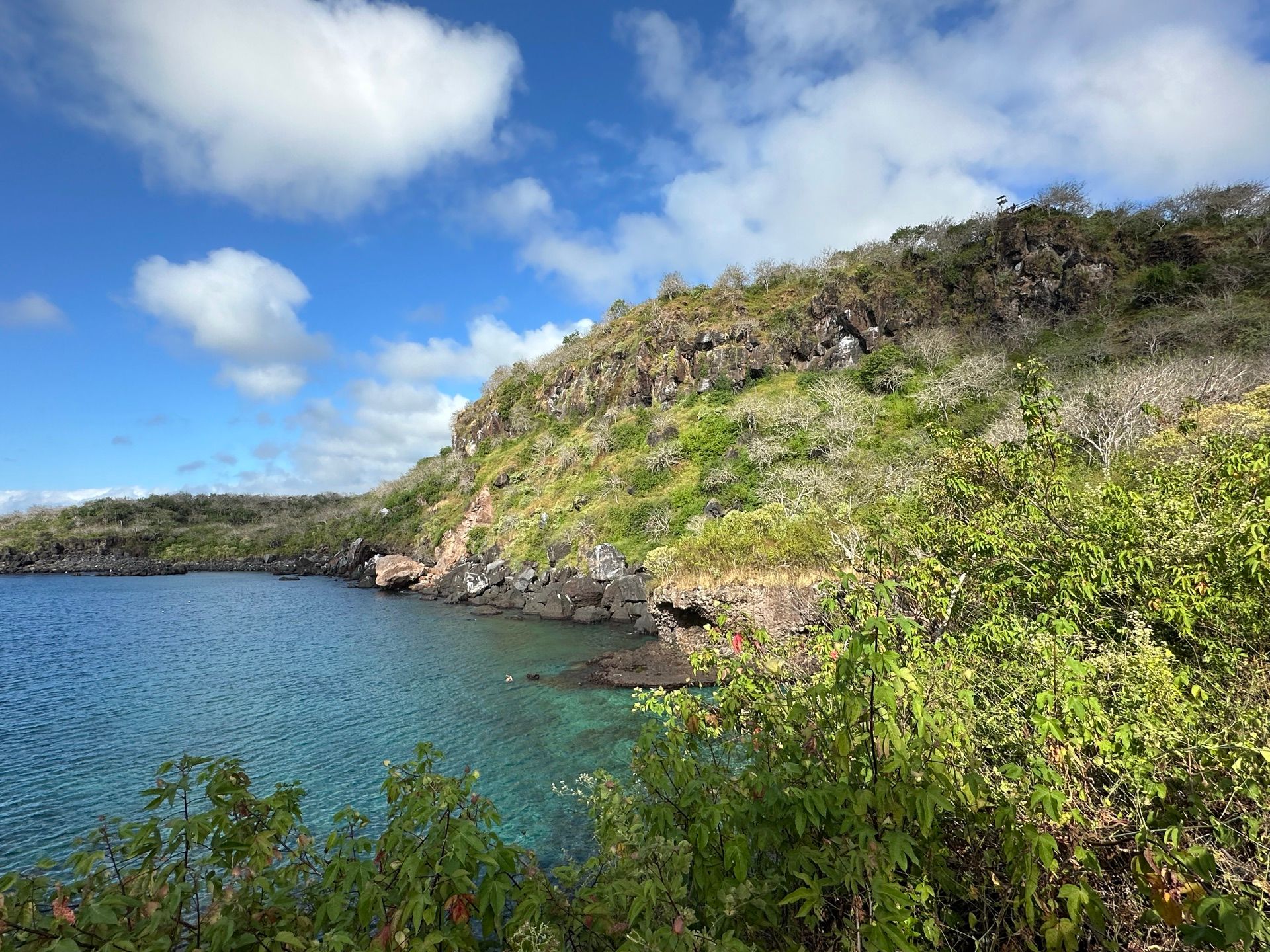
- Beaches and brackish lagoons — look for flamingos, marine iguanas and shorebirds.
- Playa del Amor and quiet coves.
- Tortoise stretches — sections where wild giant tortoises graze right beside the path.
- Lava tunnels and twisted Galápagos lava formations.
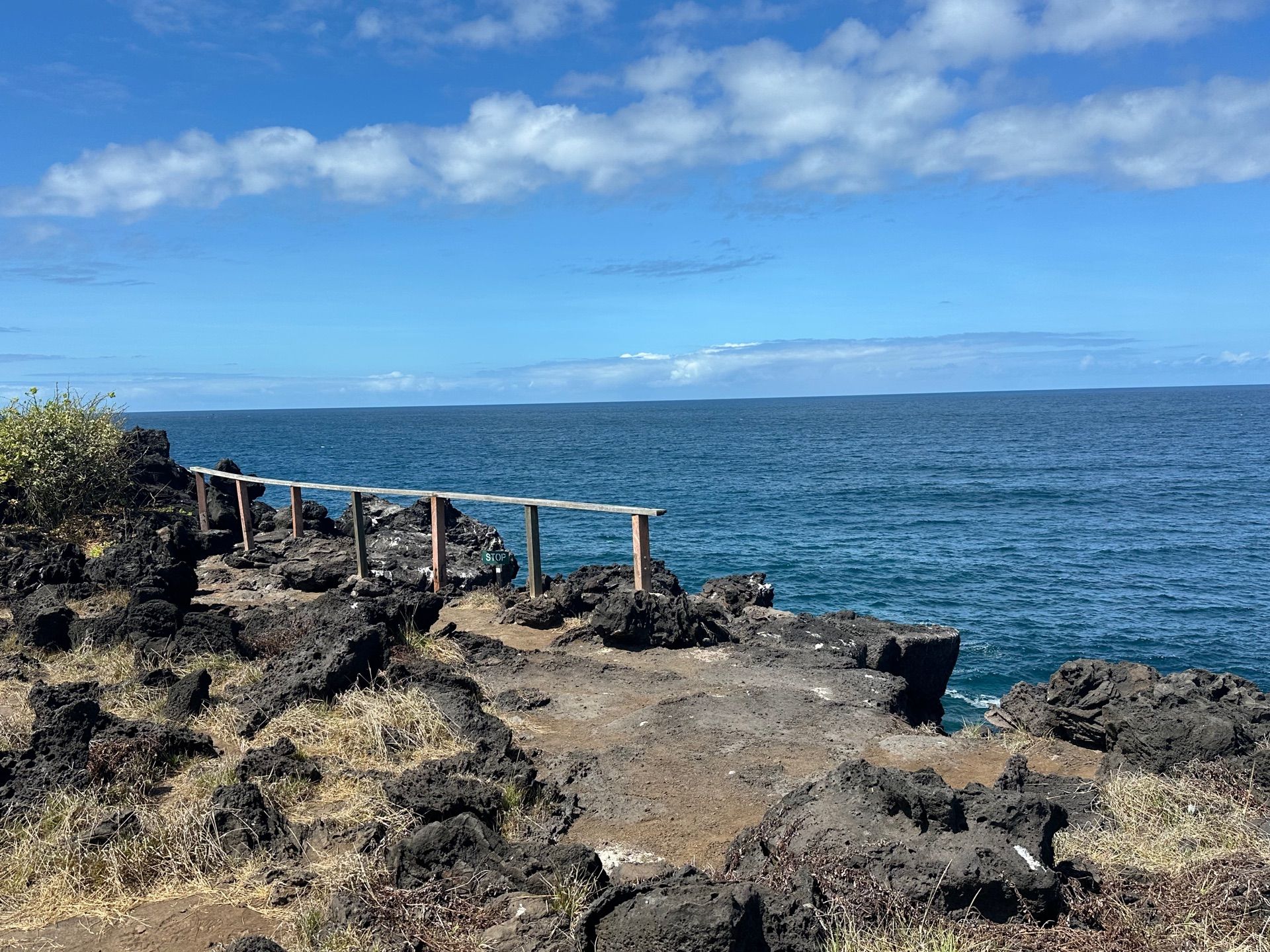
- Cerro Orchilla viewpoint — a short staircase climb near the wall to a panorama over the coast, town and lava fields. Don’t skip it.
- Interpretive signs telling the penal-colony story as you reach the wall itself.
Wildlife on the way
The Wall of Tears trail is a quiet wildlife corridor most visitors underrate. Along it you can expect:
- Giant tortoises — wild ones grazing beside the path (the nearby breeding centre is worth a look too).
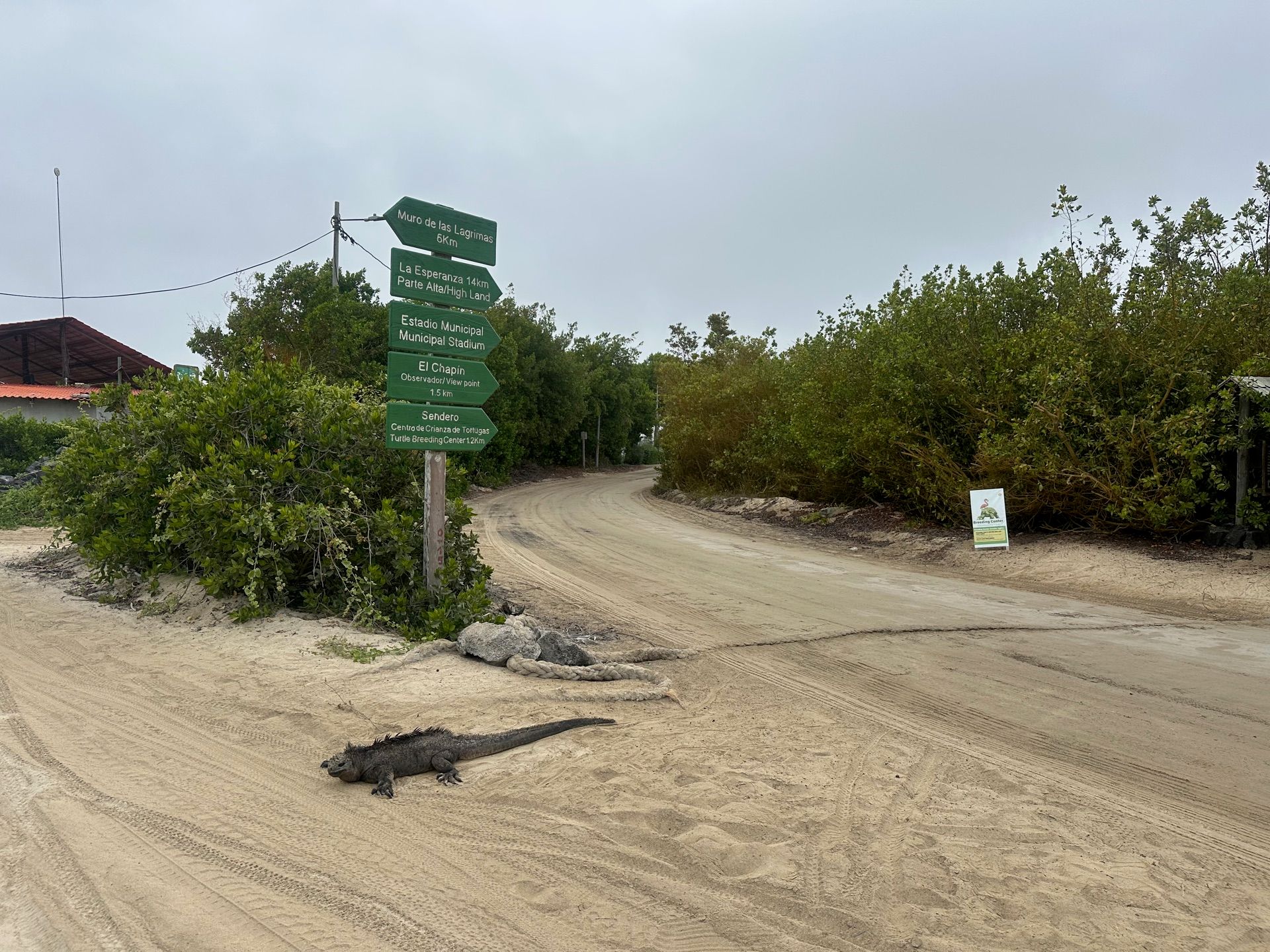
- Marine iguanas basking on the black lava.
- Flamingos in the brackish lagoons closer to Puerto Villamil.
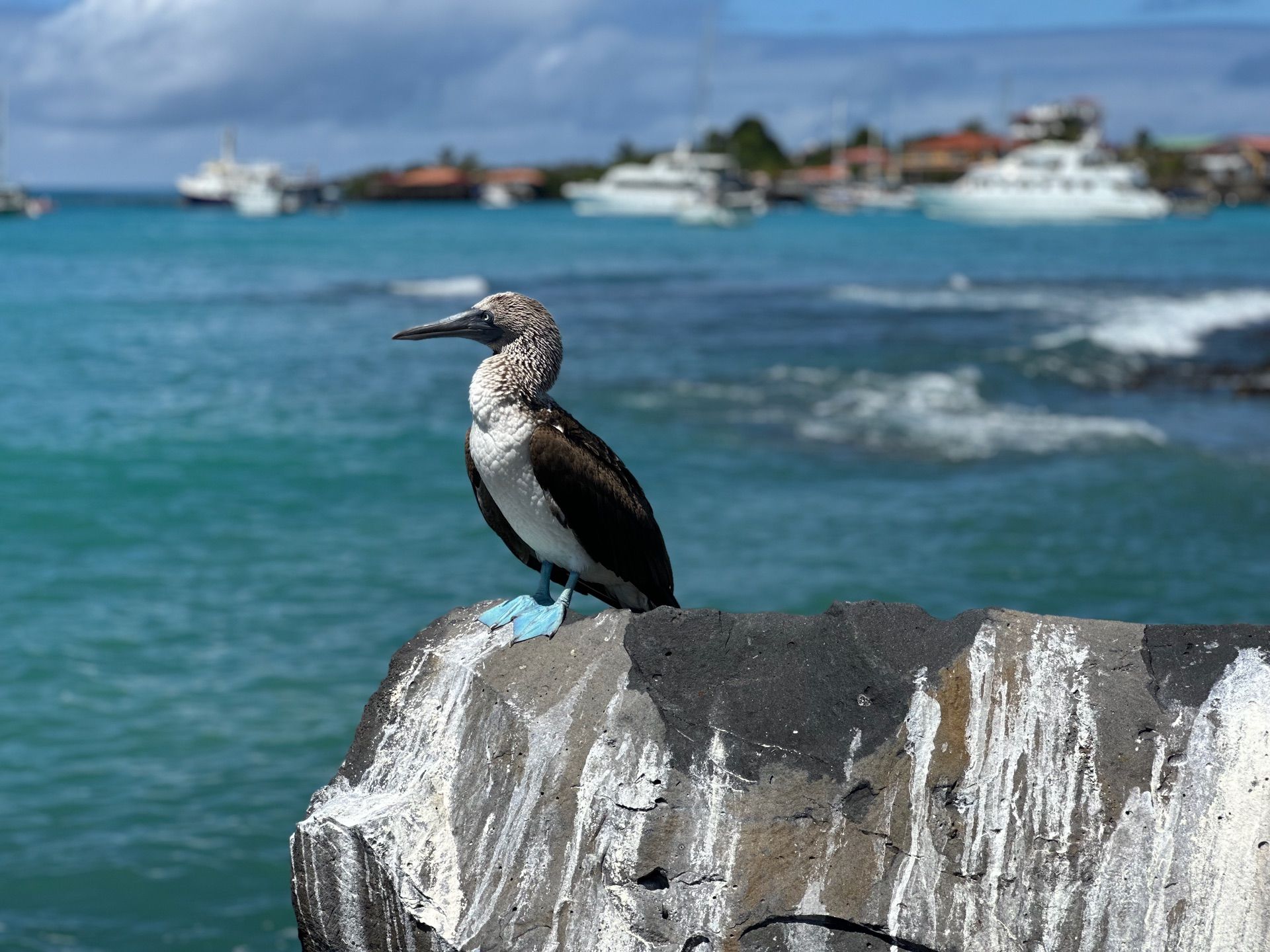
- Blue-footed boobies, finches and shorebirds along the coast.
It’s a reminder of what makes Isabela special: here, the wildlife isn’t a separate “tour” — it’s simply alongside you as you walk.
Practical tips
- Water: carry 1–2 litres each. There’s no shade and no shops on the trail.
- Sun: hat, sunscreen, sunglasses — the lava radiates heat.
- Timing: go early morning or late afternoon; avoid midday.
- Footwear: trainers or light hiking shoes are plenty (the trail is flat).
- Independence: no guide needed — unusually for the Galápagos, this is yours to walk at your own pace.
How it fits a multi-day Galápagos hike
The Wall of Tears is one stop on what we think is the best way to experience the islands: a multi-day, land-based hiking itinerary rather than a cruise. On Isabela it pairs naturally with the Sierra Negra volcano hike — one of the largest active calderas on Earth — for a full day or two of walking on a single island. See the full plan on our Isabela hiking page.
See the Galápagos the way few people do: on foot, close to the wildlife, sleeping in island towns. That’s what our Galápagos hiking trips are built around.
Frequently asked questions
What is the Wall of Tears in Galápagos?
The Wall of Tears (Spanish: Muro de las Lágrimas) is a long wall of hand-stacked black lava on Isabela Island, built by prisoners of a penal colony between 1945 and 1959. It's both a haunting historical site and the end point of one of Isabela's best easy hikes.
Why was the Wall of Tears built?
It was built as pure punishment. Prisoners in the Isabela penal colony were forced to haul jagged lava and stack it into a wall day after day, for no practical purpose. Many died of exhaustion and cruelty — hence the name, the Wall of Tears.
How do you get to the Wall of Tears from Puerto Villamil?
It's about 5–6 km west of Puerto Villamil at the end of a flat coastal track. You walk or bike there — no cars, taxis or motor vehicles are allowed on the trail. Entry is free and no guide is required, which is rare in the Galápagos.
How long is the Wall of Tears hike?
The full out-and-back is roughly 12 km. On foot it takes about 2–3 hours each way at a relaxed pace with stops; by bike it's around 1 hour each way. The trail is flat but exposed, with little shade.
Can you bike to the Wall of Tears in Galápagos?
Yes — renting a bike in Puerto Villamil (about $15–20 a day) is a popular way to do it, roughly an hour each way. Walking lets you linger over the wildlife and viewpoints; biking covers the distance faster in the heat. Either way the trail is shared and easy-going.
What wildlife can you see on the Wall of Tears trail?
Plenty — wild giant tortoises grazing beside the path, marine iguanas on the lava, flamingos in the brackish lagoons near town, and shorebirds and finches along the way. The trail doubles as one of Isabela's best easy wildlife walks.
Is the Wall of Tears worth visiting?
Yes. Few cruise visitors ever see it, the history is genuinely moving, the wildlife en route is excellent, and the viewpoint at the top (Cerro Orchilla) is lovely. As a free, self-guided hike from town, it's one of the best half-days on Isabela.