Cotopaxi
Cotopaxi Volcano: Height, Facts and Whether It's Still Active
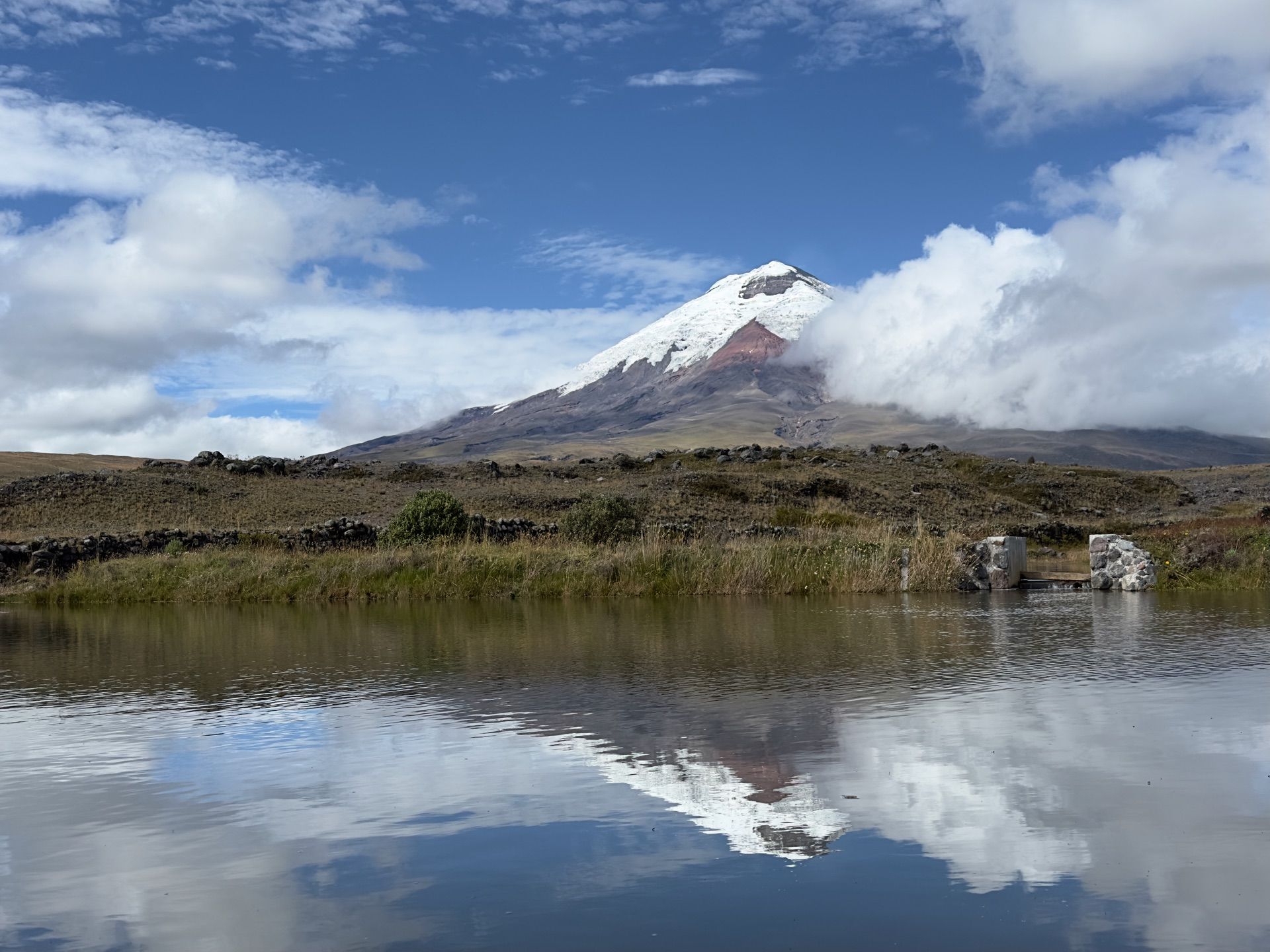
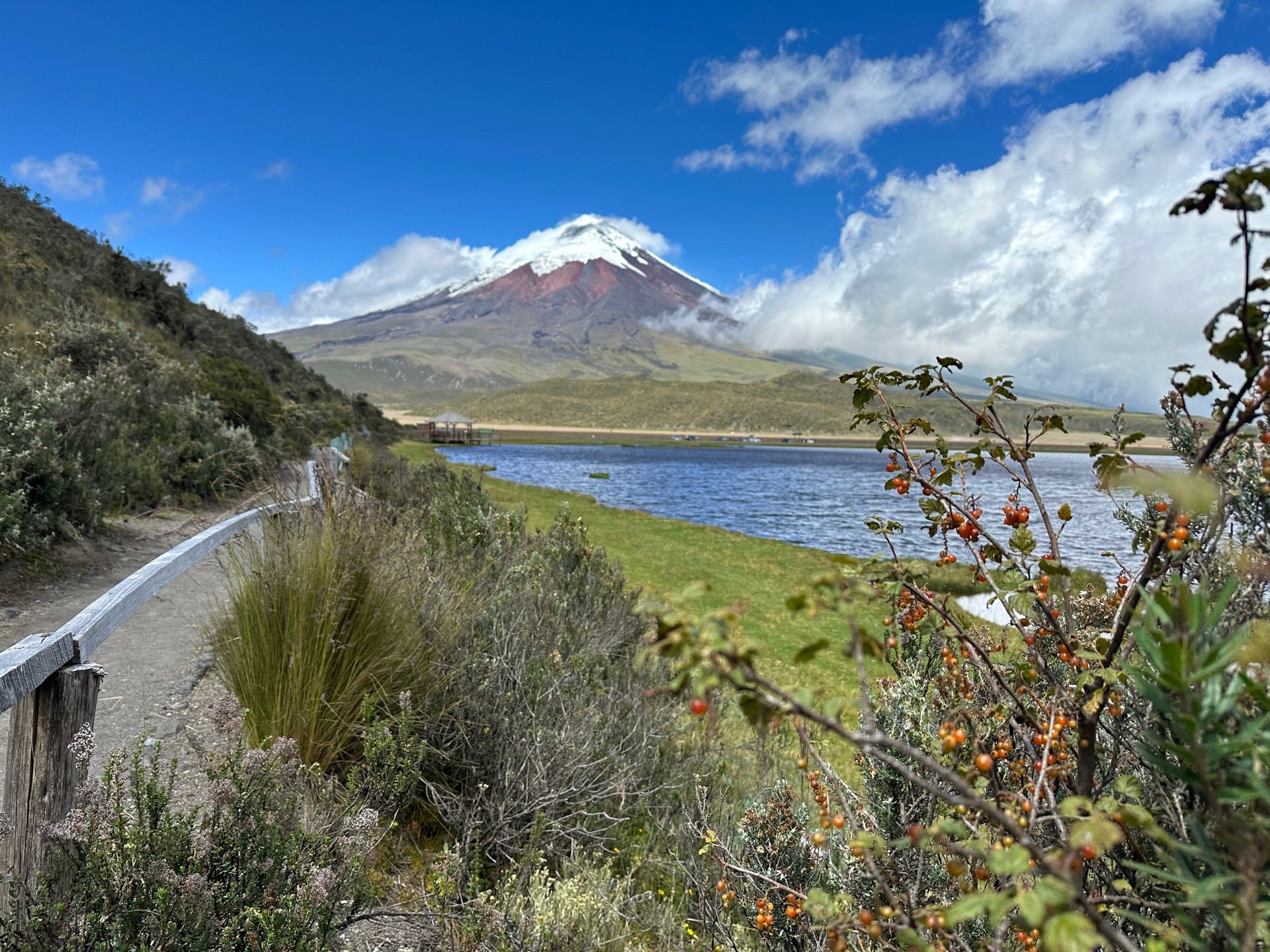
Cotopaxi volcano is a 5,897-metre (19,347 ft) active stratovolcano in the Ecuadorian Andes, about 50 km south of Quito. It’s the second-highest peak in Ecuador after Chimborazo, one of the highest active volcanoes on Earth, and — with its near-perfect glaciated cone — probably the most recognisable mountain in the country.
Most pages about Cotopaxi give you the encyclopedia version. This one is written by people who actually guide it, so alongside the numbers you’ll get what they mean if you plan to stand on the rim: how the height affects your body, whether “active” should worry you, and what the eruption history has to do with climbing it today.
Cotopaxi volcano at a glance
| Height | 5,897 m / 19,347 ft |
| Rank | 2nd highest in Ecuador; highest active volcano |
| Type | Active andesitic stratovolcano |
| Location | Cotopaxi National Park, ~50 km south of Quito |
| Range | Andes — the “Avenue of the Volcanoes” |
| Summit | Permanent glacier; symmetrical cone |
| Status | Active, monitored; last activity 2022–2023 |
| Climb | Non-technical glacier climb, guide required, ~70% summit success |
How tall is Cotopaxi?
Cotopaxi stands 5,897 m (19,347 ft) above sea level. That makes it the second-highest summit in Ecuador, behind Chimborazo at 6,263 m, and one of the highest active volcanoes anywhere in the world.
The height is not a trivia point — it’s the single thing that shapes any visit. Above about 5,000 m your body has roughly half the oxygen it has at sea level, so the difference between a good day on Cotopaxi and a miserable one is almost always acclimatization, not fitness. People fly into Quito (2,850 m), drive to the mountain the next day and wonder why the walk to the refuge floors them. It’s the altitude. If you’re thinking about going high on Cotopaxi, read our honest take on altitude and acclimatization in Ecuador before you plan anything.
What type of volcano is Cotopaxi?
Cotopaxi is an andesitic stratovolcano — a steep, conical volcano built up over tens of thousands of years from alternating layers of lava, ash and rock. Stratovolcanoes are the classic “volcano shape,” and Cotopaxi is close to a textbook example: an almost perfectly symmetrical cone, broken only by a small secondary bump on its side known as the Cabeza del Inca (“Inca’s Head”).
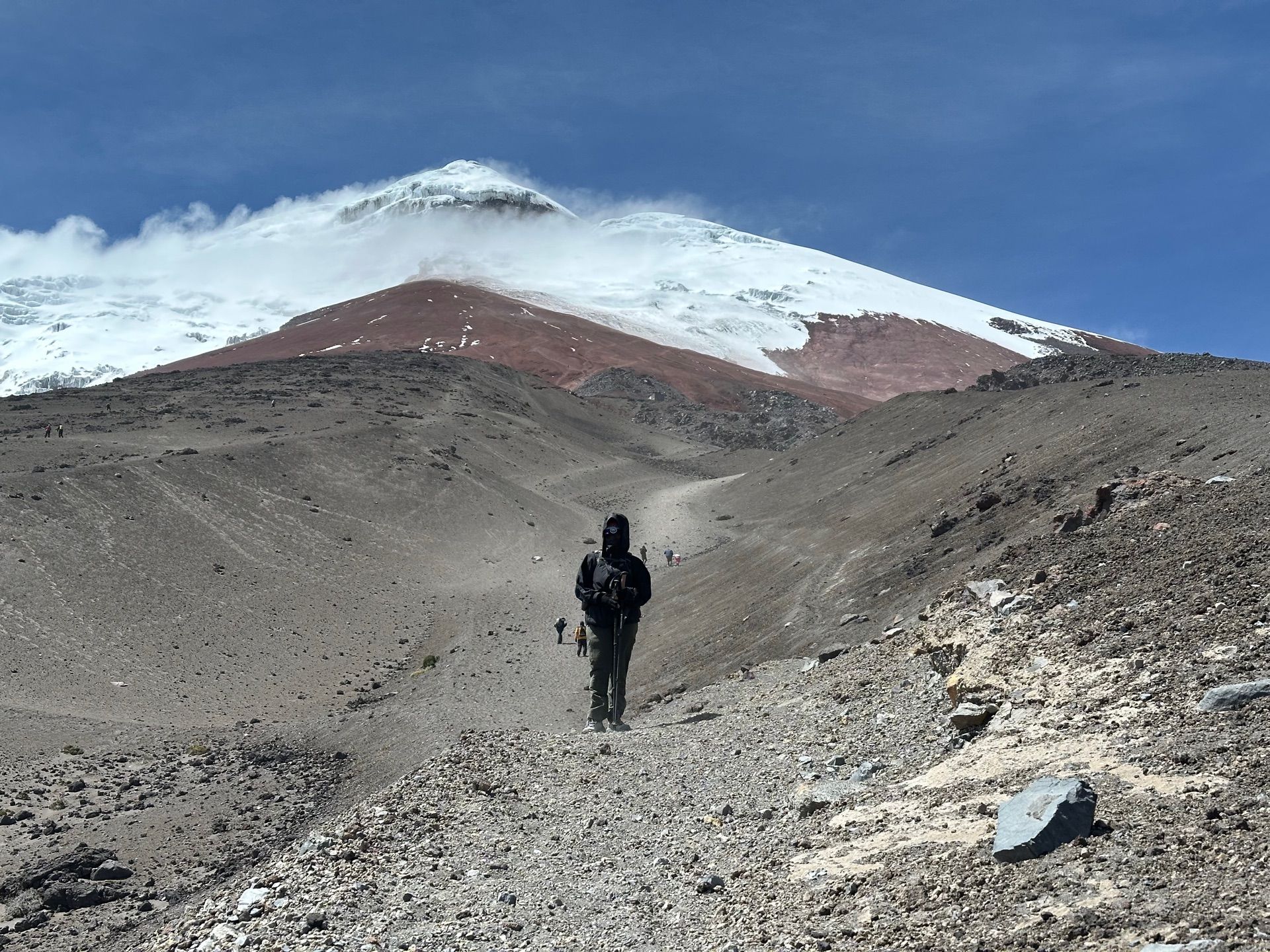
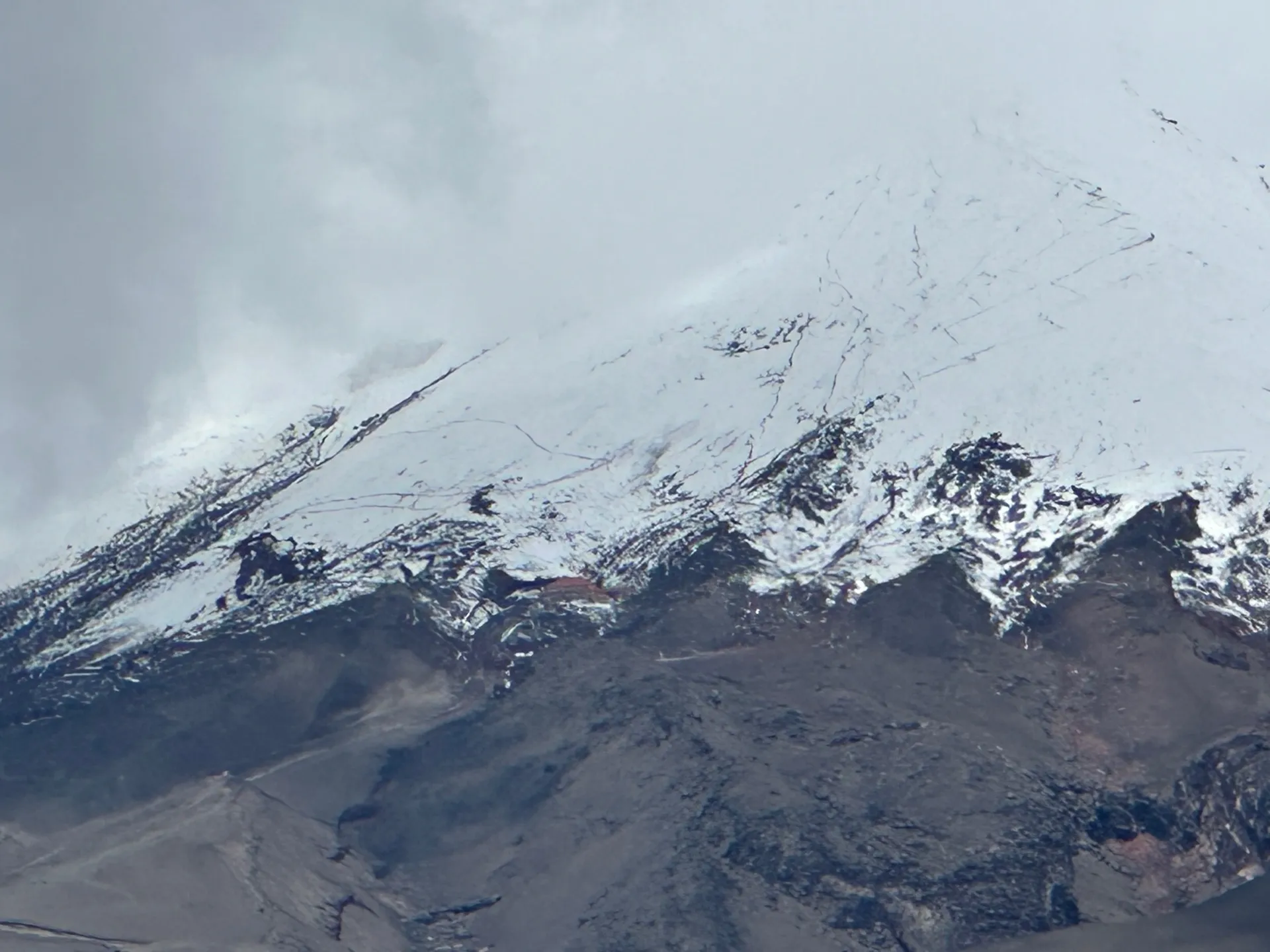
The whole upper mountain — everything above roughly 5,000 m — is covered by a permanent glacier. That ice cap is what makes the climb a real mountaineering objective rather than a walk-up, and it’s also why the eruption history matters: hot gas and rock meeting glacier ice is what produces Cotopaxi’s most dangerous feature.
Is Cotopaxi still active?
Yes — very much so. Cotopaxi is one of the most active volcanoes in the northern Andes, and it’s continuously monitored by Ecuador’s Geophysical Institute (IG-EPN) with seismometers, gas sensors and cameras.
Here’s the honest version, because “active volcano” sounds alarming and shouldn’t be: active means the mountain has erupted in the recent geological past and will again — not that it’s dangerous to stand on today. Cotopaxi had a period of unrest in 2015 (steam, ash and minor explosions) that closed the national park until 2017, and a milder ash-emitting phase in 2022–2023. The climbing route reopened in 2024. When the volcano shows signs of waking, the park and the summit close — that decision is made for you. When it’s open and guided, it’s a managed risk, not a gamble.
When did Cotopaxi last erupt?
Cotopaxi has erupted around 87 times in recorded history. Its most recent activity was the minor 2022–2023 ash phase; the last genuinely large, destructive eruptions were centuries ago.
| Period | What happened |
|---|---|
| 1742–1768 | A cluster of major eruptions, the first well documented |
| 1877 | The most destructive in memory — lahars swept down all sides and devastated the Latacunga valley |
| 1904 / 1940s | Smaller eruptive episodes, then a long quiet spell |
| 2015 | Unrest, ash and explosions; national park closed until 2017 |
| 2022–2023 | Minor ash emissions; climbing route reopened 2024 |
The 1877 eruption is the one that shaped how Ecuador treats the volcano today, because of what it sent downhill.
Lahars: Cotopaxi’s real hazard
The biggest danger from Cotopaxi isn’t lava — it’s lahars, volcanic mudflows created when an eruption melts the summit glacier and sends a fast, concrete-like slurry of water, ash and rock down the valleys. In 1877, Cotopaxi’s lahars reached both the Pacific coast and the Amazon basin, over 100 km away, and buried much of Latacunga.
That’s why the town, the park and the monitoring network exist in the shape they do: the risk is real but well understood, with warning systems and evacuation routes in place. For a visitor or climber, the practical takeaway is simple — the mountain is watched closely, and access is closed the moment it needs to be.
Where is Cotopaxi?
Cotopaxi is the centrepiece of Cotopaxi National Park, in Ecuador’s central highlands about 50 km — an hour’s drive — south of Quito. It sits on the “Avenue of the Volcanoes,” the string of high peaks that runs down the middle of the country, and on a clear morning you can see its cone from Quito itself.
You don’t have to climb it to appreciate it: the park’s páramo grassland, the Limpiopungo lagoon and the José Ribas refuge at 4,800 m are all reachable on foot, and the volcano is the backdrop to some of the best high-altitude walking in the Andes. If you’re planning a wider trip, Cotopaxi pairs naturally with the country’s other volcano climbs.
Can you climb Cotopaxi?
Yes — and it’s one of the finest non-technical high-altitude climbs in South America. There’s no rock climbing and no vertical ice, but make no mistake: it’s a glaciated 5,897 m peak, done overnight with a midnight start and a summit push at first light, roped up against crevasses. A certified guide is required inside the park, and roughly 70% of well-acclimatized climbers reach the top — the ones who don’t are usually turned back by wind or by skipping acclimatization.
Be honest with yourself about that last part. Cotopaxi is climbed by fit people with no prior mountaineering experience every week — but only if they’ve spent time high first. The best time to climb is the dry, calm window of December–January, with a second season June–August.
We run Cotopaxi as a guided multi-day climb with the acclimatization built into the itinerary, not bolted on — because that’s the difference between a summit and a long, cold walk to the refuge.
Frequently asked questions
How tall is Cotopaxi volcano?
Cotopaxi is 5,897 metres (19,347 ft) high — the second-highest summit in Ecuador after Chimborazo, and one of the highest active volcanoes in the world.
Is Cotopaxi still active?
Yes. Cotopaxi is an active stratovolcano, continuously monitored by Ecuador's Geophysical Institute. It had a phase of ash emissions in 2022–2023; the climbing route reopened in 2024. It is not erupting now, but it is very much a live volcano.
When did Cotopaxi last erupt?
Its most recent activity was a minor ash-emitting phase in 2022–2023. Before that, a period of unrest in 2015 closed the national park until 2017. The last large, destructive eruptions were in the 18th and 19th centuries — most notably 1877.
What type of volcano is Cotopaxi?
Cotopaxi is an andesitic stratovolcano — a steep, layered cone built from alternating lava and ash. It has an almost perfectly symmetrical shape and a permanently glaciated summit.
Where is Cotopaxi volcano located?
Cotopaxi sits in Cotopaxi National Park in the Ecuadorian Andes, about 50 km (an hour's drive) south of Quito, along the Avenue of the Volcanoes.
Can you climb Cotopaxi volcano?
Yes. Cotopaxi is a non-technical but glaciated climb to 5,897 m, done overnight with a midnight summit push. A certified guide is required inside the park, and roughly 70% of well-acclimatized climbers reach the top. We run it as a guided multi-day climb with acclimatization built in.
Is Cotopaxi the highest volcano in Ecuador?
No — that's Chimborazo at 6,263 m. Cotopaxi (5,897 m) is the second-highest, but because Chimborazo's summit is an extinct cone, Cotopaxi is Ecuador's highest active volcano and its most iconic climb.